Fall Book Notes and Previews (Biba, Art Noveau, and the 19th Century)

The books just keep coming! And not surprisingly, there were many released in time for the new school year. The vast majority of these are museum publications, however, reflecting the ever-increasing popularity of fashion exhibitions in museums.

The Biba Years, 1963-1975 By Barbara Hulanicki and Martin Pel

(September 23, 2014, V &A Publishing)

A revealing look at the fashion revolution of the 1960s and ’70s through the groundbreaking, hip, and now-legendary London emporium Biba, this book looks at “the most beautiful store in the world.” Biba, founded in 1963 by designer Barbara Hulanicki, quickly gained cult status and outgrew several locations before the five-story “Big Biba” opened in 1973. More than a store, it was a haven of cool for artists, movie stars, and rock musicians. This book tells the story of the Biba decade, and how the label revolutionized retail and fashion culture. With a wealth of previously unpublished material, including full-color facsimiles of the six luxurious Biba catalogs and archival photographs, The Biba Years, 1963-1975 looks at the first retailer to bring affordable fashion to young consumers. Stunning new photography documents the unique Biba look, and the designer and her contemporaries offer their personal insights.”
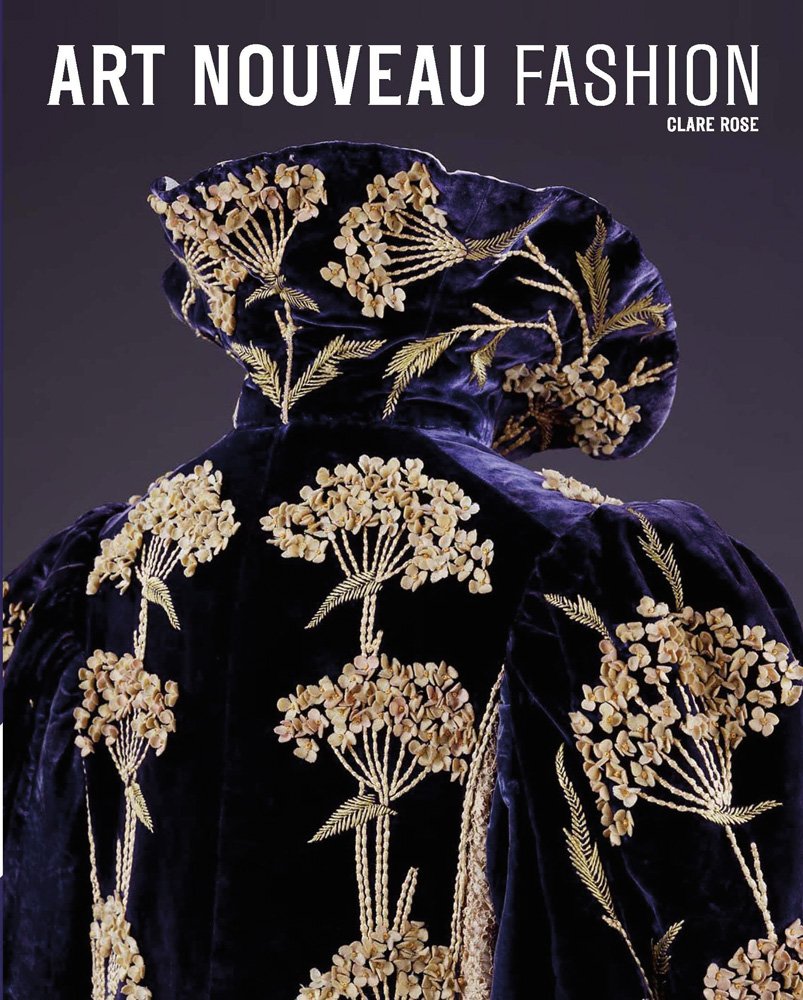
Art Noveau Fashion By Clare Rose (September 16, 2014, V & A Publishing)

The stunning designs of Worth, Paquin, Poiret, Fortuny, and more are showcased in this look at the glamorous world of Art Nouveau fashion. Providing an introduction to the style, which overlaps with late Arts and Crafts in the 1890s and early Modernism in the 1910s, the book focuses on these important designers before discussing Art Nouveau jewelry and accessories, advertising, the influence of exotic Eastern cultures, and artists, among them Beardsley, Klimt, and Mackintosh. New color photographs of gar­ments from the V&A’s collection are accompanied by period images of such style icons as Lily Langtry, Loïe Fuller, and Consuelo Vanderbilt, many previously unpublished. Striking and seductive, Art Nouveau styles were revived by the counterculture in the late 1960s and continue to resonate today.”

Fashioning the 19th Century: Habits of Being 3 By Cristina Giorcelli and Paula Rabinowitz (August 7, 2014, Univ of Minnesota Press)

In nineteenth-century Europe and the United States, fashion—once the province of the well-to-do—began to make its way across class lines. At once a democratizing influence and a means of maintaining distinctions, gaps in time remained between what the upper classes wore and what the lower classes later copied. And toward the end of the century, style also moved from the streets to the parlor. The third in a four-part series charting the social, cultural, and political expression of clothing, dress, and accessories, Fashioning the Nineteenth Century focuses on this transformative period in an effort to show how certain items of apparel acquired the status of fashion and how fashion shifted from the realm of the elites into the emerging middle and working classes—and back.

The contributors to this volume are leading scholars from France, Italy, and the United States, as well as a practicing psychoanalyst and artists working in fashion and with textiles. Whether considering girls’ school uniforms in provincial Italy, widows’ mourning caps in Victorian novels, Charlie’s varying dress in Kate Chopin’s eponymous story, or the language of clothing in Henry James, the essays reveal how changes in ideals of the body and its adornment, in classes and nations, created what we now understand to be the imperatives of fashion.
Contributors: Dagni Bredesen, Eastern Illinois U; Carmela Covato, U of Rome Three; Agnès Derail-Imbert, École Normale Supérieure/VALE U of Paris, Sorbonne; Clair Hughes, International Christian University of Tokyo; Bianca Iaccarino Idelson; Beryl Korot; Anna Masotti; Bruno Monfort, Université of Paris, Ouest Nanterre La Défense; Giuseppe Nori, U of Macerata, Italy; Marta Savini, U of Rome Three; Anna Scacchi, U of Padua; Carroll Smith-Rosenberg, U of Michigan.


Continue Reading

Guest Exhibition Review: “Exposed: The History of Lingerie”

*

EXPOSED: THE HISTORY OF LINGERIE
MUSEUM @ FIT
JUNE 3-NOVEMBER 15, 2014

Guest Exhibition Review By Nadine L. Stewart

Saks Fifth Avenue camiknickers, crepe chiffon, silk satin, c. 1924, France, Museum purchase, P86.63.5.

Exposed: The History of Lingerie explores a fashion story that often takes a secondary place in the fashion history—what’s been worn underneath our clothes. These are the pieces that give our bodies the current fashionable silhouette or the clothes we wear for our most intimate moments in bed or lounging at home. Curator Colleen Hill has been fascinated with lingerie since 2008 when she curated Seduction, an exhibition that focused on the erotic nature of fashion. Through the intervening years she kept track of the Museum’s lingerie collection, which occupies the back of its huge clothing storage area. Her interest intensified when the Museum acquired several beautiful collections of custom lingerie, with pieces that were marvels of beautiful details and exquisite craftsmanship. The result is a fascinating exhibit of intimate wear from the eighteenth century to the present.

The first thing one sees in the Museum’s vast lobby is a platform with five underwear ensembles designed by the 2014 BFA students of FIT. Hill told me she decided these garments should provide the prologue to the exhibit because the students’ work was so professional. In the outside entry case stands a mannequin in a witty 1994 Moschino evening dress with a pouf skirt made entirely of 20 black underwire bras complete with their dangling shoulders straps.

But it inside that the real spell of the exhibit takes hold. Mounted on the first platform is a raspberry colored satin corset from around 1889 that glows like a jewel in the low light. Hill told me this corset surprised her for several reasons. One, it was an early example of colored lingerie, which was just becoming acceptable. Even more important, the corset’s bones were made of coraline, a plant based material that was probably more comfortable to wear than the steel bones common at the time. That meant it was probably marketed by Warner Brothers as a “healthy” garment for the stylish woman. The corset shares the platform with a Peter Sorensen evening dress from 2007 with a corset bodice and another jewel-colored corset from the 1850s, this time in blue satin.

Claire McCardell evening dress, printed nylon, 1950, USA, gift of Mr. and Mrs. Adrian McCardell, 72.61.182.

Throughout the exhibit garments are often paired, making it possible to see how the intimate “under” garment was morphed into an “outer” garment. For example, an Empire line nightgown from the 1950s is paired with a Claire McCardell evening gown from the same decade, both in the new wonder fiber—nylon. A princess line slip from 1910 replete with eyelet trim stands next to the lingerie dress—a glorious confection of white eyelet and sheer muslin.

The panorama continues. In the next room is an eighteenth century corset with tie-on sleeves. Such a garment could be worn as outerwear. Next to it is quilted petticoat, which would have been visible too. A lady would pull her overskirt and tied it up, so she could show off the petticoat’s elegant stitch patterns To remind us of that an eighteenth century lady was expected to stand straight, whalebone busk from the 1780s lies in a case in front. This piece would have been inserted into the corset in a place provided between the breasts to keep the wearer erect and stately.

Amid all the elegance and couture work are two companies from the present day that show us how lingerie still fascinates women today. Both Victoria’s Secret and Hanky Panky give the consumer fashionable linger at an affordable price. Hill was also impressed by Hanky Panky’s ethical standards of production in these days of concern over sustainability. But how can one forget that Hanky Panky claims to produce the “worlds most comfortable thong” for a wide range of sizes? There it is–in a colorful three pack!

Another notable company is Cadolle of Paris, a family-owned firm still producing beautiful ready-to-wear and custom lingerie after 5 generations. Founded in 1889 it pioneered innovative brassiere designs and is one of the few companies to produce custom lingerie today. On view is a baby doll nightgown and corset in pink lace.

One of the loveliest lingerie styles was the tea gown, a robe that women of the nineteenth and early twentieth centuries wore to relax and entertain in the privacy of their homes. Hill chose several to display. There’s an early white cotton and lace dressing gown from the 1850s that hides the body under its generous cut. By 1900 the robe was an alluring confection of chiffon, silk and lace. The Fernende Burel gown on display is accented with silk roses placed strategically on each breast! Next to it is an elegant brown silk hostess gown hand printed with gold by Suzanne Bertillon from the 1920s and a Delphos dress which, we are reminded, was originally designed to be worn as tea gown without a corset.

It’s a stunning array that continues with choice examples that bring the exhibit to the present day with the Wonderbra from 1994 and the overtly sexual style of Agent Provocateur. One of the joys of this exhibit is the simplicity of the exhibit layout. It has been well edited, so that the garments are clearly visible without excess clutter. After following the styles of fashionable dishabille, we know that lingerie and the urge for special underwear is something that has continued through the centuries. What’s next?”– Nadine L Stewart

Exposed will be on display till November 15th. On Thursday, November 6, Curator Colleen Hill will host Poupie and Patricia Cadolle in a conversation about their unique family-run business. Admission is free, but reservations are required. Register online.

The accompanying exhibition catalog, written by Colleen Hill and Valerie Steele, is also available now:

*Corset (stay), silk, silk ribbon, whalebone, c. 1770, possibly Europe, Museum purchase, P82.1.16

Continue Reading

Come to the CSA Western Region Conference for the papers! (Details)

*

I’m excited for the upcoming Costume Society of America Western Region conference (October 10-12 in Portland, OR). You can still register (through October 1). The paper presentations have just been announced and will include:

  • From Rice paddies to Parisian Runways: Issey Miyake’s Revival and Reinvention of Traditional Japanese Peasant Textiles by Brenna Barks (Worn Through and CSA Western Region board member)
  • Queering the Costume Collection: Collecting and Displaying GLBTQ style in a Regional History Museum by Clara Berg
  • The Michael Arnaud Fashion Photography Archive by Meghan Hanson (of FIDM Museum)
  • WPA Sewing Rooms in the Pacific Northwest, 1935 to 1943: Developing a Regional Study by Jennifer M. Mower
  • Convergence of Clothing Cultures: From 20th Century Streets (1940’s to 1980’s) to 21st Century Runways by Linda Florence PhD
  • Fashioning the Weil West: the Influence of Rockmount Ranch Wear Manufacturing Company  by Ilana Winter
  • Romaine Brooks and the Amazons in the Drawing Room: The Tuxedo Deconstructing Gender by JoAnn Stabb (UC Davis professor emeritus)

*Women at work in a WPA sewing room.

Continue Reading

Fashion Books of Summer 2014: Turquoise, Dress Patterns, Luxury, Branding, and the Kimono

This summer saw a number of fashion-related titles published from both University and traditional Trade publishing houses. Here’s a quick round-up of some of those titles you might want to add to your fall reading list:

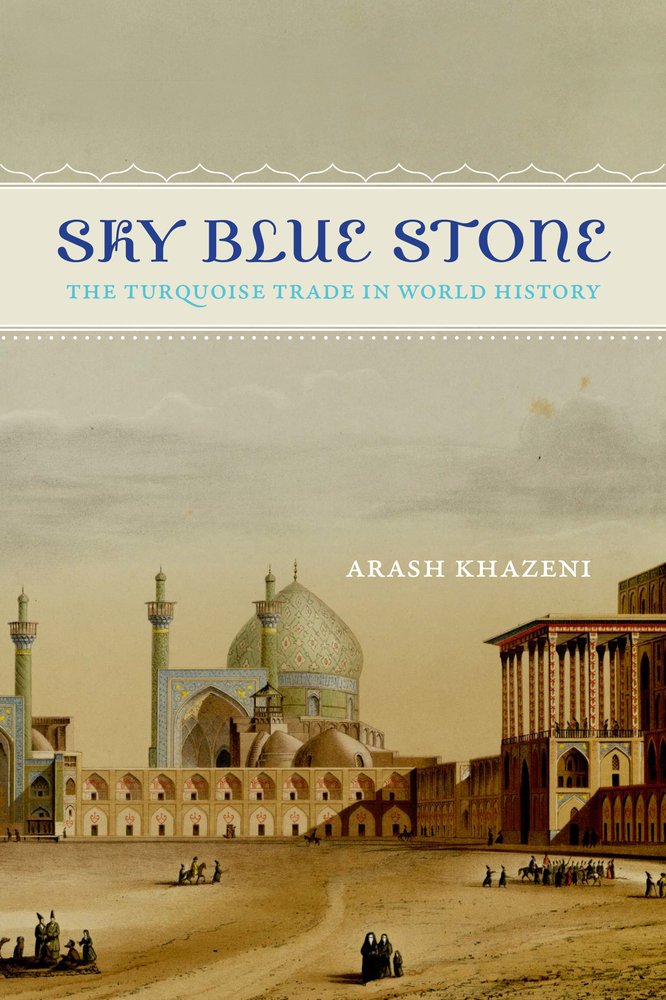
The Sky Blue Stone: The Turquoise Trade in World History by Arash Khazeni (UC Press, May 2014)

This book traces the journeys of a stone across the world. From its remote point of origin in the city of Nishapur in eastern Iran, turquoise was traded through India, Central Asia, and the Near East, becoming an object of imperial exchange between the Safavid, Mughal, and Ottoman empires. Along this trail unfolds the story of turquoise–a phosphate of aluminum and copper formed in rocks below the surface of the earth–and its discovery and export as a global commodity.

In the material culture and imperial regalia of early modern Islamic tributary empires moving from the steppe to the sown, turquoise was a sacred stone and a potent symbol of power projected in vivid color displays. From the empires of Islamic Eurasia, the turquoise trade reached Europe, where the stone was collected as an exotic object from the East. The Eurasian trade lasted into the nineteenth century, when the oldest mines in Iran collapsed and lost Aztec mines in the Americas reopened, unearthing more accessible sources of the stone to rival the Persian blue.

Sky Blue Stone recounts the origins, trade, and circulation of a natural object in the context of the history of Islamic Eurasia and global encounters between empire and nature.”

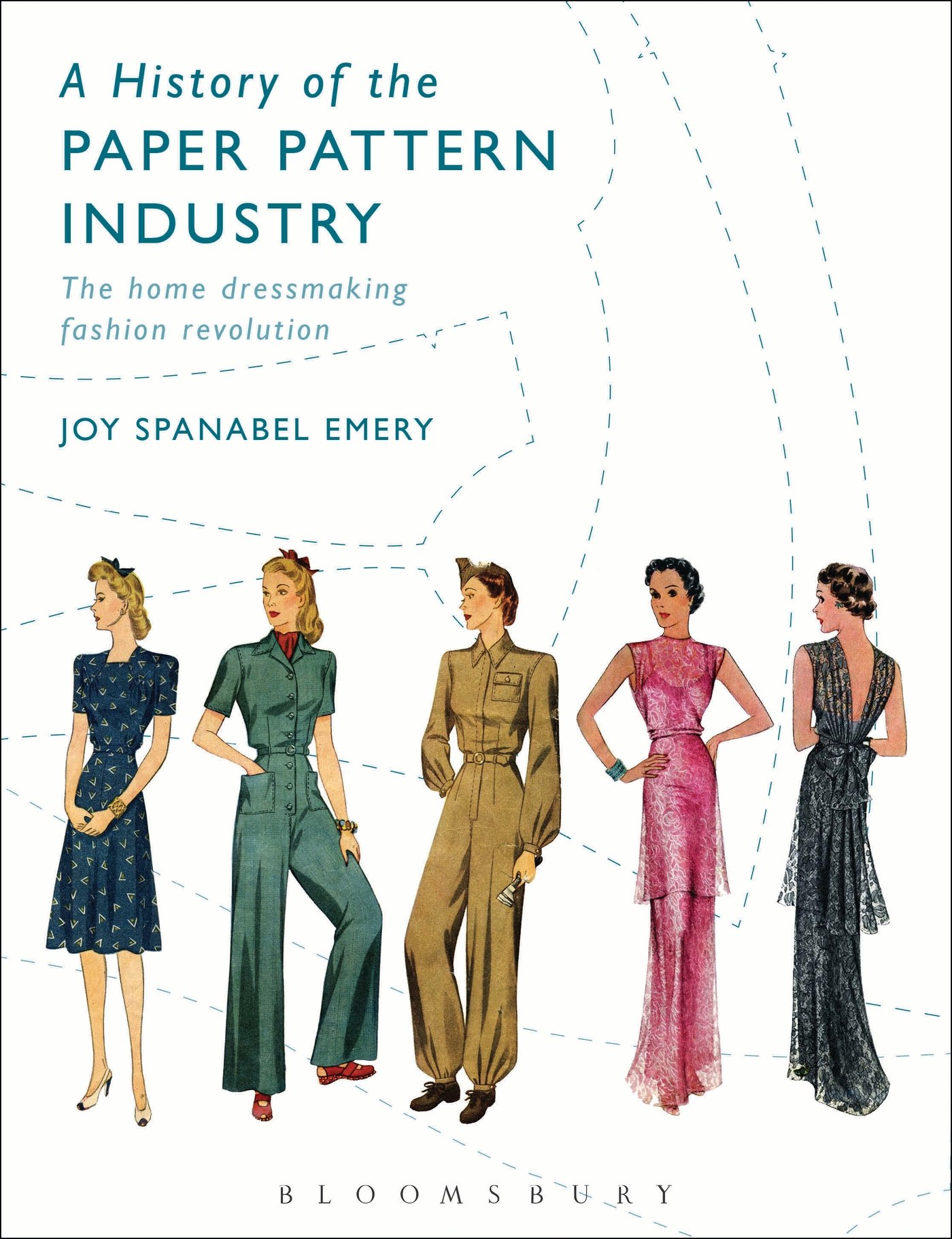
History of the Paper Pattern Industry by Joy Emery (Bloomsbury, June 2014)

Sewing patterns have been the principle blueprint for making garments in the home for centuries. From their origins in the tailoring manuals of the 16th century to the widely produced pamphlets of the 18th and 19th centuries, through to the full size packet patterns of today, their history and development has reflected major changes in technology (such as the advent of the sewing machine), retailing and marketing practices (the fashion periodical), and shifts in social and cultural influences.

This accessible book explores this history, outlining innovations in patternmaking by the companies who produced patterns and how these reflected the fashions and demands of the market.

Showcasing beautiful illustrations from original pattern pamphlets, packets and ads, as well as 9 complete patterns from which readers can reproduce vintage garments of different eras, the book provides a unique visual guide to homemade fashions as well as essential exploration of the industry that produced them.”

Luxury: Fashion Lifestyle and Excess by Patrizia Calefato and Lisa Adams (Bloomsbury, June 2014)

Luxury has been both celebrated and condemned throughout history right up to the present day. This groundbreaking text examines luxury and its relationship with desire, status, consumption and economic value, exploring why luxury remains prominent even in the context of a global recession.

Using approaches from cultural studies, semiotic research and aesthetics, Luxury presents a wide range of case studies including urban space and new technologies, travel, interior design, cars, fashion ads and jewellery to explore what luxury represents, and why, in the contemporary world.”

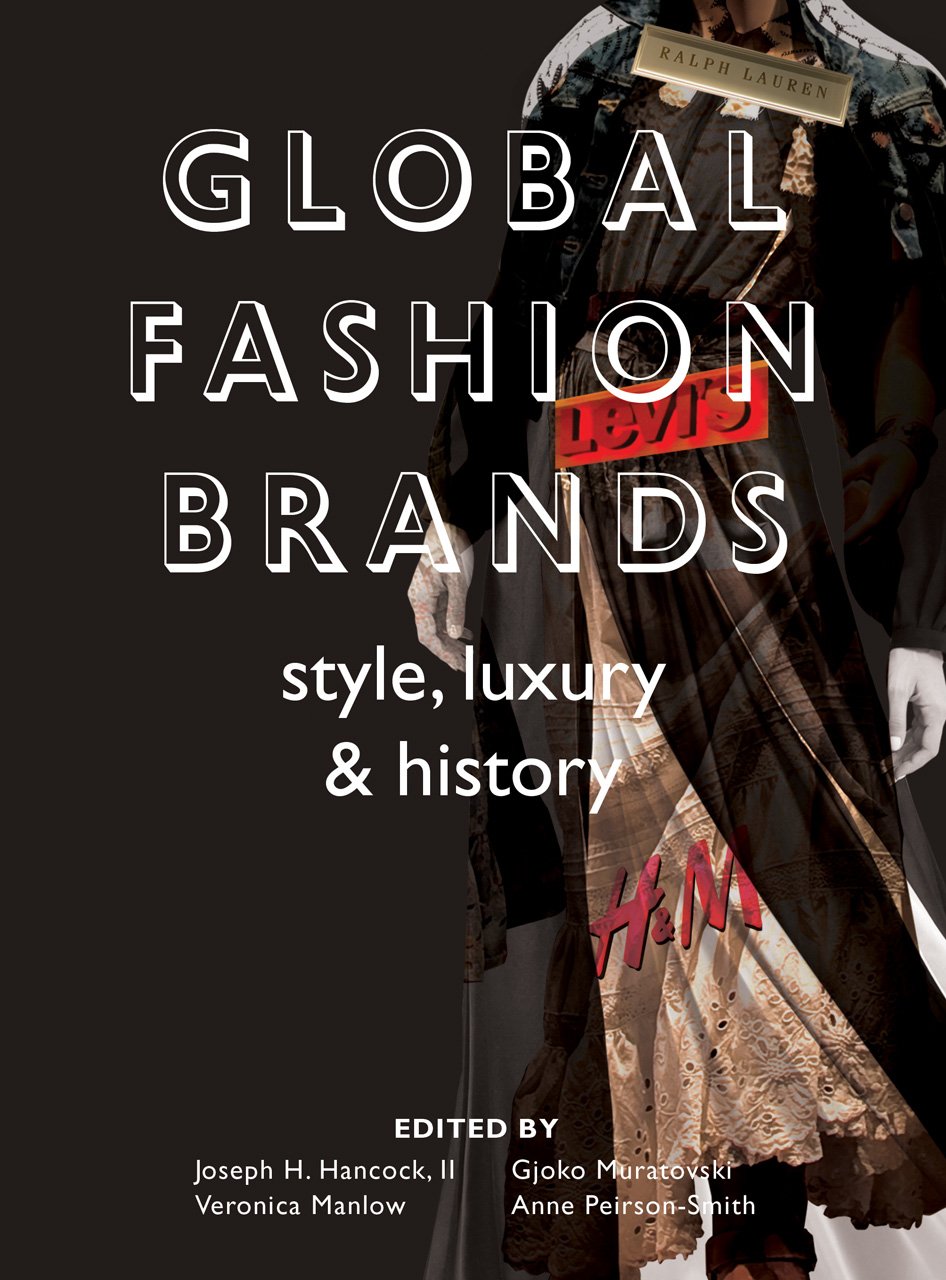
Global Fashion Brands: Style, Luxury & History by Joseph H. Hancock II, Gjoko Muratovski, Veronica Manlow and Anne Pierson-Smith (Intellect, Aug 15, 2014)

Fashion branding is more than just advertising. It helps to encourage the purchase and repurchase of consumer goods from the same company. While historically fashion branding has primarily focused on consumption and purchasing decisions, recent scholarship suggests that branding is a process that needs to be analyzed from a style, luxury, and historical pop cultural view using critical, ethnographic, individualistic, or interpretive methods.

In this collection, the contributors explore the meaning behind fashion branding in the context of the contested power relations underpinning the production, marketing, and consumption of style and fashion as part of our global culture. “

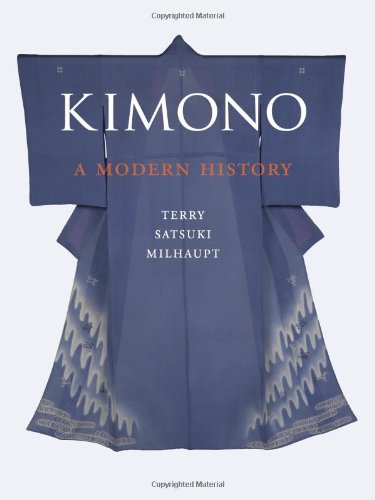
Kimono: A Modern History by Terry Satsuki Milhaupt (Reaktion Books, Aug 15, 2014)

What is the kimono? Everyday garment? Art object? Symbol of Japan? As this book shows, the kimono has served all of these roles, its meaning changing across time and with the perspective of the wearer or viewer.
Kimono: A Modern History begins by exposing the seventeenth- and eighteenth-century foundations of the modern kimono fashion industry. It explores the crossover between ‘art’ and ‘fashion’ in this period at the hands of famous Japanese painters who worked with clothing pattern books and painted directly onto garments. With Japan’s exposure to Western fashion in the nineteenth century, and Westerners’ exposure to Japanese modes of dress and design, the kimono took on new associations and came to symbolize an exotic culture and an alluring female form. In the aftermath of the Second World War, the kimono industry was sustained through government support. The line between fashion and art became blurred as kimonos produced by famous designers were collected for their beauty and displayed in museums, rather than being worn as clothing. Today, the kimono has once again taken on new dimensions, as the Internet and social media proliferate images of the kimono as a versatile garment to be integrated into a range of individual styles.
Kimono: A Modern History, the inspiration for a major exhibition at the Metropolitan Museum of Art in New York, not only tells the story of a distinctive garment’s ever-changing functions and image, but provides a novel perspective on Japan’s modernization and encounter with the West.”

Continue Reading

My Nightstand: Schiaparelli in “Fashion and War in Popular Culture”

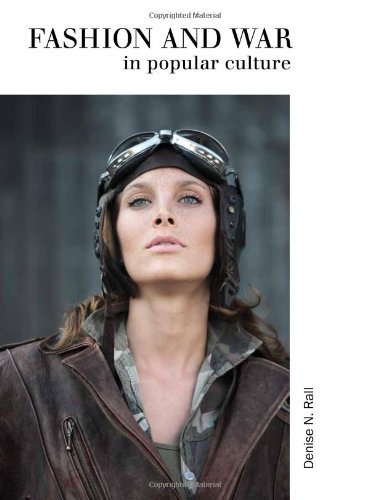
I’ve had the same book resting on my nightstand for months now: Fashion and War in Popular Culture by Denise N. Rall (Intellect, (March 15, 2014). It’s there for those now increasingly rare moments when I have a little free brain space (and time) to pick it up. My main interest has been Chapter 4 “In the service of clothes: Elsa Schiaparelli and the war experience” by Griffith University Professor, Annita Boyd.

1940. “As her status as an Italian in Paris is becoming risky, she sets off to live in New York until 1945 and continues to help France through many initiatives across the Atlantic.” (Schiaparelli.com)

This chapter focuses on how war, and the military, influenced Schiaparelli’s design – but it also offers some valuable information on what she was up to during the war (and how those experiences later influenced her work). I’ve not read much about her career during and after the war, so I was immediately drawn to this particular essay.

As explained in Boyd’s essay, Schiaparelli’s career was viewed as a failure after the war and her work was seen as ‘out of step with post-war sensibility.’ – Boyd examines this notion, but also offers information on what Schiaparelli was doing during these years (1945-1954 and 1955-1973). This in itself makes the book worth it’s (quite affordable) price.

Very little has been written on Schiaparelli during this time. It is fascinating stuff: she was accused of being anti-French (for promoting French couture in America); of being a fascist for wearing a hat; but smuggled American money to friends in Europe in a hat, toured America lecture about French couture in 1940; and volunteered (along with her daughter) for the American Red Cross in New York. The all too brief chapter goes on to discuss how Schiaparelli’s military and surrealist influenced designs failed to take hold in the post war years, and also to discuss the recent Schiaparelli revival.

1940. Elsa Schiaparelli in New York Legion of Honor, George Hoyningen-Huene.

Other essays in this book include historical and more recent military and fashion interactions, including: “Fashionable fascism: Cinematic images of the Nazi before and after 9/11” by Kylee M. Harman-Warren;  “The discipline of appearance: military style and Australian flight hostesss uniforms 1930-1964” by Prudence Black; and “Battle dressed – clothing the criminal or ‘the hoddie’ in Britain” by Joanne Turney.

PS: You can follow author Annita Boyd on Twitter at @AnnitaBoyd


Continue Reading

Catching up: Fashion books you should know about

Since the beginning of 2014, I’ve found myself swimming in a wealth of new fashion history scholarship. In the coming weeks and months, I hope to share some of these gems with you: some in passing and some in greater depth. If you’ve read any of these and have comments, I hope you’ll share them with me and other readers as we go. Here are just a few that I should have already mentioned, that have come out relatively recently*:

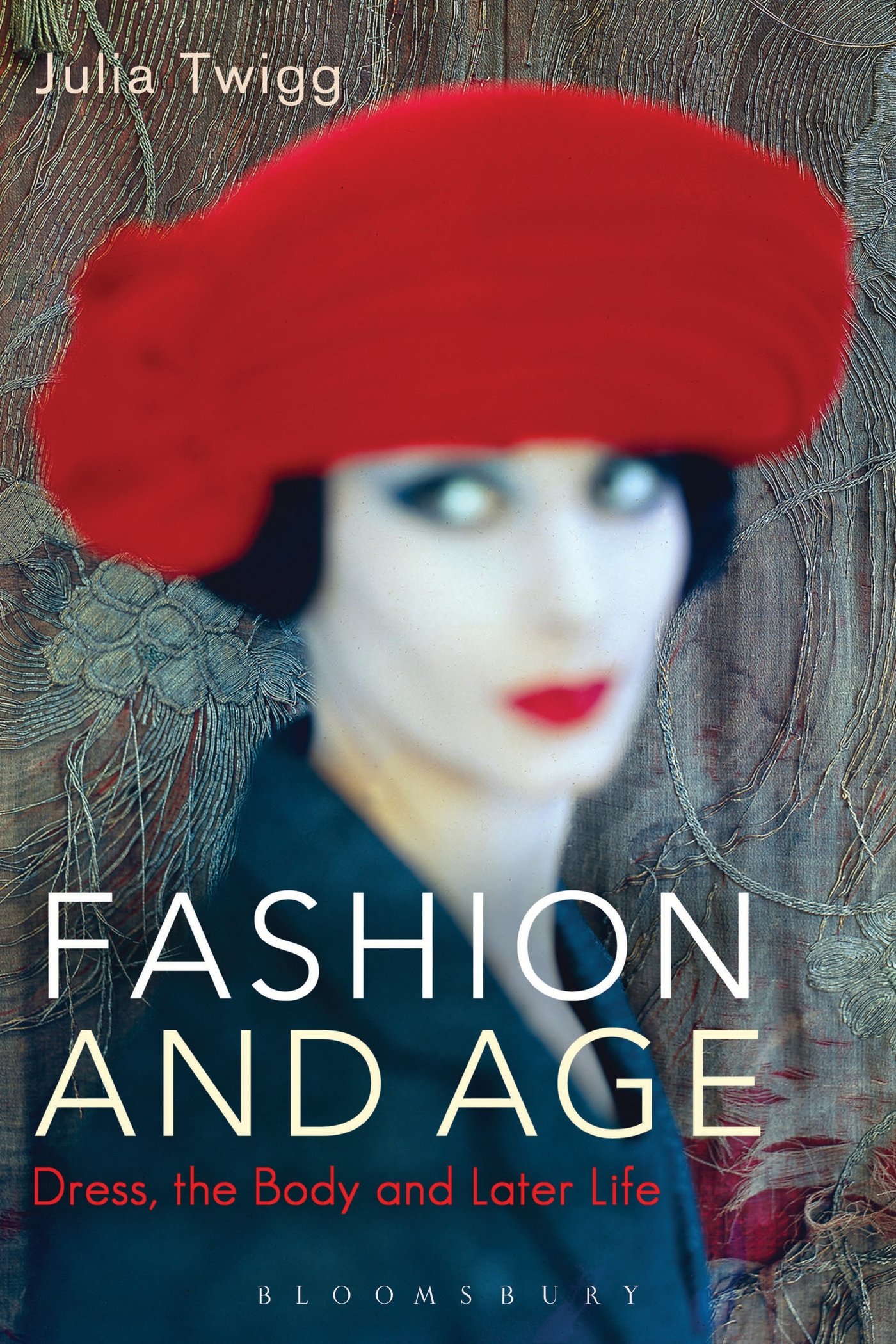
Fashion and Age: Dress, The Body and Later Life by Julia Twigg (Bloomsbury, September 2013)

Throughout history certain forms and styles of dress have been deemed appropriate – or more significantly, inappropriate – for people as they age. Older women in particular have long been subject to social pressure to tone down, to adopt self-effacing, covered-up styles. But increasingly there are signs of change, as older women aspire to younger, more mainstream, styles, and retailers realize the potential of the ‘grey market’.

Fashion and Age is the first study to systematically explore the links between clothing and age, drawing on fashion theory and cultural gerontology to examine the changing ways in which age is imagined, experienced and understood in modern culture through the medium of dress. Clothes lie between the body and its social expression, and the book explores the significance of embodiment in dress and in the cultural constitution of age.

Drawing on the views of older women, journalists and fashion editors, and clothing designers and retailers, it aims to widen the agenda of fashion studies to encompass the everyday dress of the majority, shifting the debate about age away from its current preoccupation with dependency, towards a fuller account of the lived experience of age. Fashion and Age will be of great interest to students of fashion, material culture, sociology, sociology of age, history of dress and to clothing designers.”

The Language of Fashion by Roland Barthes (Bloomsbury, December 2013)

Roland Barthes was one of the most widely influential thinkers of the 20th Century and his immensely popular and readable writings have covered topics ranging from wrestling to photography. The semiotic power of fashion and clothing were of perennial interest to Barthes and The Language of Fashion – now available in the Bloomsbury Revelations series – collects some of his most important writings on these topics. Barthes’ essays here range from the history of clothing to the cultural importance of Coco Chanel, from Hippy style in Morocco to the figure of the dandy, from colour in fashion to the power of jewellery. Barthes’ acute analysis and constant questioning make this book an essential read for anyone seeking to understand the cultural power of fashion.”

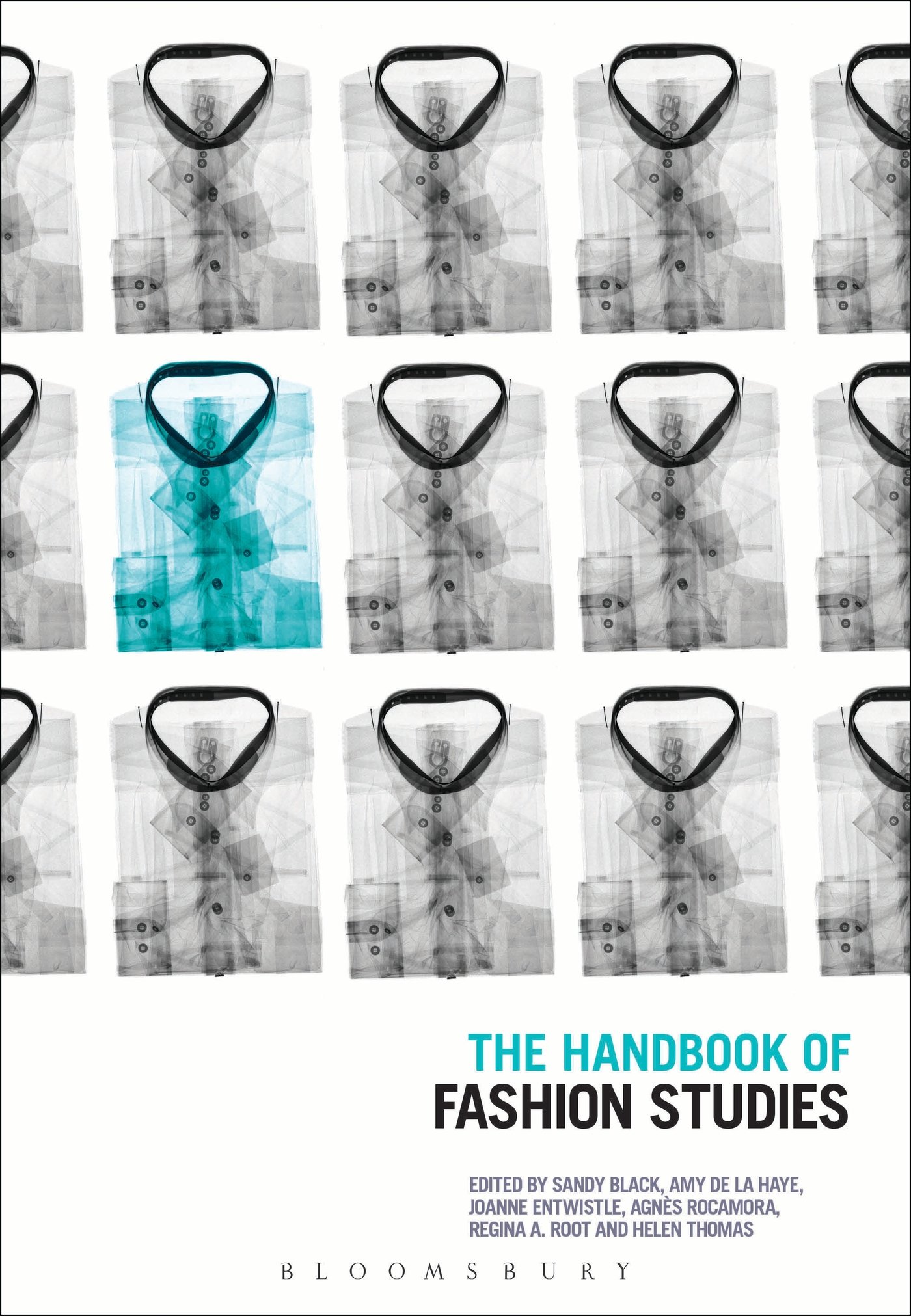
The Handbook of Fashion Studies by Amy de la Haye, Agnès Rocamora, Joanne Entwistle and Helen Thomas (Bloomsbury, December 2013)

The Handbook of Fashion Studies identifies an innovative spectrum of thematic approaches, key strands and interdisciplinary concepts that continue to push forward the boundaries of fashion studies. The book is divided into seven sections: Fashion, Identity and Difference; Spaces of Fashion; Fashion and Materiality; Fashion, Agency and Policy; Science, Technology and New fashion; Fashion and Time and, Sustainable Fashion in a Globalised world.

Each section consists of approximately four essays authored by established researchers in the field from the UK, USA, Netherlands, Sweden, Canada and Australia. The essays are written by international subject specialists who each engage with their section’s theme in the light of their own discipline and provide clear case-studies to further knowledge on fashion. This consistency provides clarity and permits comparative analysis.”

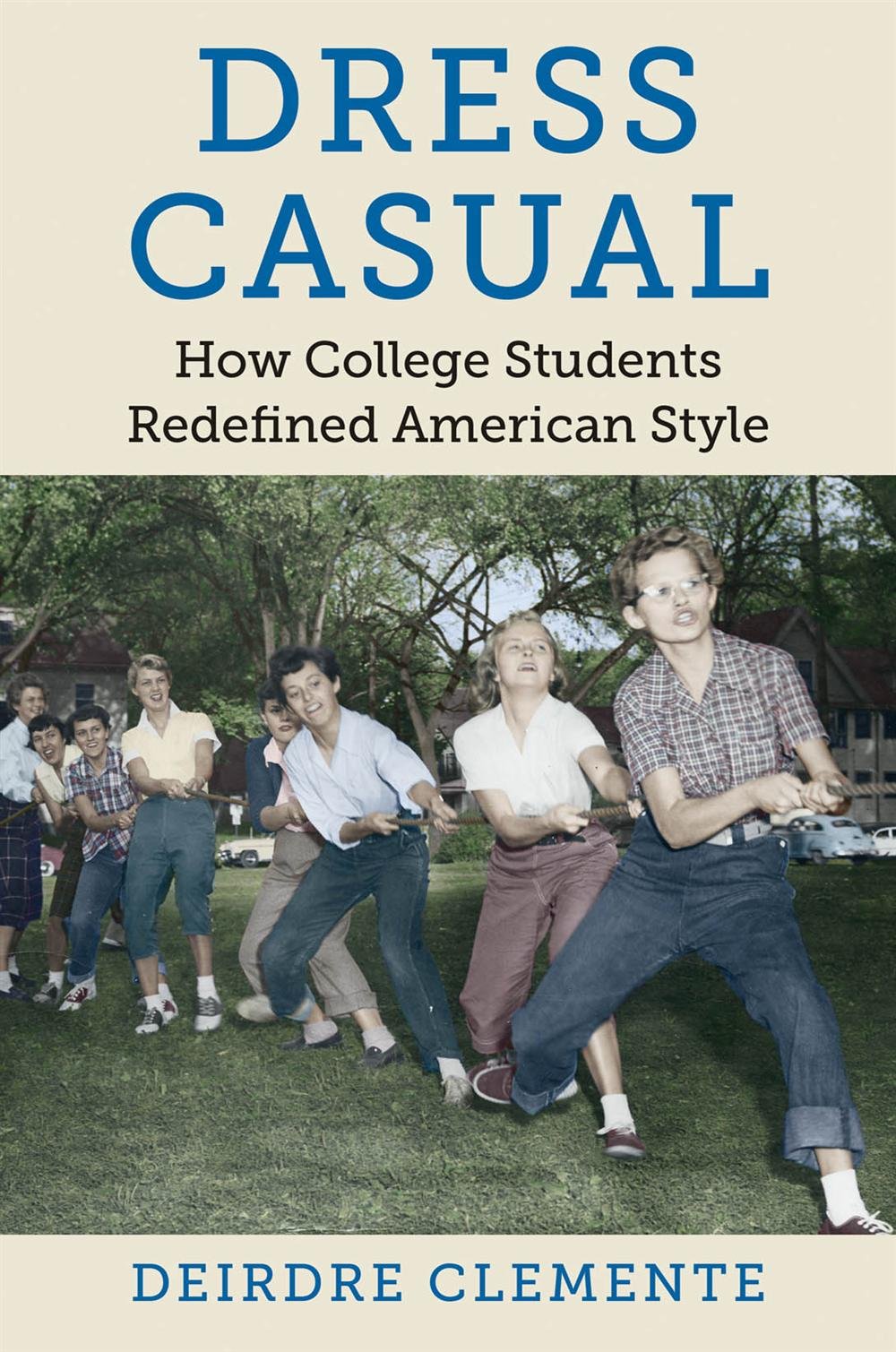
Dress Casual: How College Students Redefined American Style by Deirdre Clemente (University of North Carolina Press, April 2014)

As Deirdre Clemente shows in this lively history of fashion on American college campuses, whether it’s jeans and sneakers or khakis with a polo shirt, chances are college kids made it cool. The modern casual American wardrobe, Clemente argues, was born in the classrooms, dormitories, fraternity and sorority houses, and gyms of universities and colleges across the country. As young people gained increasing social and cultural clout during the early twentieth century, their tastes transformed mainstream fashion from collared and corseted to comfortable. From east coast to west and from the Ivy League to historically black colleges and universities, changing styles reflected new ways of defining the value of personal appearance, and, by extension, new possibilities for creating one’s identity.

The pace of change in fashion options, however, was hardly equal. Race, class, and gender shaped the adoption of casual style, and young women faced particular backlash both from older generations and from their male peers. Nevertheless, as coeds fought dress codes and stereotypes, they joined men in pushing new styles beyond the campus, into dance halls, theaters, homes, and workplaces. Thanks to these shifts, today’s casual style provides a middle ground for people of all backgrounds, redefining the meaning of appearance in American culture.”


*Please note these descriptions come directly from the publishers.

Continue Reading

Exhibition Review: Civil War Quilts at the New York Historical Society

*

Homefront & Battlefield: Quilts and Context in the Civil War at the New York Historical Society

ends August 31, 2014

Guest Review by Nadine Stewart

“Cotton thread holds the Union together; unites John C. Calhoun and Abbot Lawrence. Patriotism for holidays and summer evenings, with music and rockets, but cotton thread is the Union.” –Ralph Waldo Emerson, May 23, 1846

Homefront and Battlefield is a bland title for a powerful exhibit that gives us a unique look at the reign of “King Cotton,” the fiber that shaped American history. The subtitle “Quilts and Context in the Civil War” is even blander. There are quilts throughout, each with its own powerful story. But was really gives the exhibit its impact are the many, small items that show how important textiles were for those on the battlefield and at home. There are small shreds of fabric—including commorative ribbons, dress swatches, and uniform clothing fragments—that were treasured for the memories they evoked of a loved one or an event in the tragedy that shapes our history to this day. Each piece, no matter how simple, evokes the individuals caught up in a dangerous time and struggling to survive it. The result is a unique exhibit that shatters many of our myths about the past.

The first thing one sees in the gallery is a huge bale of cotton, the raw cotton of the South that accounted for 50% of American exports by 1850. New York State banned the slave trade in 1827, but like all the Northern states, the state’s businesses profited from trade with the slave states. The bonds between North and South were so strong, so strong plantation owners in the South could not imagine that northern businesses could exist without the materials produced by the slave economy. A small example of this interdependence is a book of fabric swatches from Rhode Island. The cheap, coarse material is “negro cloth” intended for the slave clothing. Rhode Island lead the country in producing this material. Nearby is a small child’s vest of that coarse cloth, clothing that would mark the wearer as enslaved. Close by is a “Free Labor Dress” of the 1850s, a blend of wool and silk worn by an abolitionist Quaker, part of a group who refused to wear garments produced by the supply chain that depended on slave labor.

The 1867 “reconciliation quilt,” by Lucinda Ward Honstain of Brooklyn, is in the show “Homefront & Battlefield: Quilts and Context in the Civil War” at the New-York Historical Society.

A full section is devoted to quilts and textiles with patriotic imagery—items as large as full quilts, and as small as “housewifes,” small handmade rolls for sewing supplies that featured flag images. Even children wore clothing to show which side their family was on. One example is a little girl’s cotton dress from Xenia, Ohio printed with a small repeat pattern of Union flags and soldiers. Another is a small apron from 1862 with Confederate symbols appliquéd on its bib and skirt. A garment like this would silently show an entire family’s defiance of the North.

Another section shows more practical things– blankets, bandages, tents, or uniforms for the troops made by women volunteers North and South. When the war began, neither side had enough of these basic supplies. Women filled that gap, volunteering countless hours to roll bandages, knit stockings, and sew uniforms. A soldier could go through on pair of socks in a week. Machine made socks were considered inferior. An 1861 Peterson’s print shows soldiers at Christmas exulting over a shipment of new socks. There are posters for fund raising fairs that sold fancywork of all kinds to raise money for the war effort. It is estimated that women’s volunteerism on both sides raised a billion dollars to support the troops in the four years of the war.

The story of business during the war is not so admirable. Near the section on women’s goods are mosquito nets, tents, uniforms, and blankets all produced by war contractors. There are also pieces that show the dark side of all that production, uniforms made of shoddy. This cloth made of recycled wool fiber, made huge profits for wartime merchants, like Brooks Brothers, but disintegrated in the first rains. Industries often slowed down production to make scarce goods more profitable. Mill owners from Lowell, Massachusetts sold their raw cotton at inflated prices and laid off ten thousand women workers.

Intimate items of clothing tell their own story. On display is a nightshirt modified for an amputated left arm, a money pocket and money belt designed to be worn under women’s crinolines, so money and valuables could be kept safe from marauding soldiers; and, of course, mourning clothing. Dressing properly for mourning the dead was so important that a Confederate nurse scolded her sister, “How could you come out of New Orleans without any black cloathes (sic) for me?” A mourning day dress in a soft lavender print is on display, its voluminous sleeves and gathered skirt remind us also just how much cotton cloth it took for the proper lady’s dress. The hold of King Cotton on fashion was a strong one.

The small textile pieces amplify the stories of this exhibit’s extraordinary quilts, each with a special story. The curators refuse to allow us to sentimentalize these stories or use them to “prettify” history. A simple quilt in dark, somber wool material made of blanket scraps and old uniforms hangs in the first section of the exhibit. A Union soldier in a hospital stitched it after he after he escaped from Confederate troops. An album quilt from upstate New York is beautifully pieced in the Chimney Sweep pattern. But what distinguishes it are the handwritten messages, like “Brave soldier thou will ever be remembered.” on each block. A beautiful piece with floral appliqués shows no sign of the war, but it was sold to raise funds for Confederate troops around 1862.[1]

The exhibit ends with Reconstruction. We usually think Reconstruction ended in 1876 as the nation prepared for its Centennial year, united again. Mourning ribbons for President Abraham Lincoln surround the “Reconciliation” quilt made in Brooklyn, New York in 1867. Two blocks stand out. One shows Confederate President Jefferson Davis next to a young woman holding an American flag. Another shows a black man facing a white man with the words “Master I am free.” It is clear the quilt’s maker hoped the nation could resolve its divisions.

But two items remind us that the problems of the War still affect us today. Mounted in a lone vitrine is a single white Ku Klux Klan hood From the 1920s. Nearby hangs a KKK banner from same period. The Klan resurged in 1915 due to anti-immigrant feeling. A closer look at these pieces tells a chilling story. The hood belonged to a woman. The banner is from the “Realm of Vermont.” When the Klan reappeared, women were accepted as members. Its chapters spread into the North. These mute artifacts confront us with one final question—how much did the Civil War actually resolve?

After Lincoln was assassinated, his secretary of the navy wrote reflected in a diary entry that “…. the incidents are fresh in my mind and may pass away with me by cannot ever by me be forgotten.” Through the display of many objects saved by people of all classes, Homefront and Battlefield gives us an understanding of that troubled time.

Those memories haunt us still 150 years later.

Author’s note: New York Historical has mounted a large sampling of Bill Cunningham’s Facades in the back hall of the first floor, so you will be able to see them when you exit Homefront and Battlefield! A nice bonus!”


[1] The exhibit is careful to dispel a myth about quilts that grew up in the 1990s. The story arose that escaping slaves were guided in on their way north by quilts that were hung out in a special “code.” A label states firmly that no record of this has ever surfaced from escaped slaves or participants in the Underground Railroad. It adds such a story does a “disservice to the true heroism and ingenuity of the slaves who escaped and those who helped them.”

*Made for “AK” in Pennsylvania by an unidentified quiltmaker, this textile illustrates the life of a Zouave soldier. It includes fabrics used by seamstresses at the Schuylkill Arsenal in Philadelphia to make Zouave uniforms. “AK” may have been Adam Keller or Albert Keen, both of whom served with the 88th Regiment, Pennsylvania Volunteers, which boasted two companies of Zouaves. Collection of Kelly Kinzle.

Continue Reading

Guest Exhibit Review: Bill Cunningham’s Facades at New York Historical Society


Currently on view at the New York Historical Society (through June 15, 2014), “Bill Cunningham: Facades” is a photography show from the now iconic photographer and the results of an eight-year project to document the architectural riches and fashion history of New York City which pairs models in period costumes with historic settings. Nadine Stewart, Fashion Historian, has graciously provided a review here for those not able to see the exhibit in person, or for those looking for some analysis of the show. Thanks again to Nadine!

“Fashion is the armor to survive the reality of everyday life. I don’t think you should do away with it. It would be like doing away with civilization.”

— Bill Cunningham

Today Bill Cunningham is an icon. Readers of the New York Times can follow his analysis of street styles and social life every week. He was the subject of a critically acclaimed documentary. He’s followed fashion tirelessly both in New York and abroad for 35 years. When he began, it was a lonely quest. Now bloggers copy his work every day. None of them have the knowledge or wit to equal him.

“Facades” covers an early period in Cunningham’s career. It’s a smaller, quieter exhibit across the park from the glory of the Charles James exhibit at the Metropolitan Museum of Art. Yet its images resonate just as strongly. The pictures were taken in the late 1960s when he was transitioning to his special brand of fashion photography from earlier work as a milliner and fashion journalist.

Grand Central Terminal, New York City, ca. 1968-1976 By Bill Cunningham, Gelatin silver photograph, New-York Historical Society, Gift of Bill Cunningham

Beginning in 1968, Cunningham shot a series of 88 gelatin silver prints that matched iconic New York architecture with historic fashions–a range that stretches from the eighteenth century to the 1950s. His model for this eight year project was his neighbor in the Carnegie Hall Artist Studios, Editta Sherman, a fellow photographer who became his partner and muse. Together they scoured thrift shops, flea markets and auctions for vintage clothing. One find, later photographed in front of St Paul’s Chapel, was an eighteenth century man’s coat and vest scrounged for a secondhand shop on Ninth Avenue. In the end, they used 500 outfits at 1800 locations.

In 1968, New York was considered a decaying hulk. Historic buildings like Penn Station were being torn down to make way for an uncertain new future. Preserving the past was still being debated. Some city planners felt that the only way for the city to develop was to cut its link with the past and tear down older buildings. Cunningham clearly disagreed with this approach, a feeling that comes through in the loving way he photographs each building, finding angles a less informed observer would have missed. Editta was the perfect muse for this project. A striking image of Editta in a graffiti-covered subway car dressed in Edwardian splendor, sums up the grittiness of the time, but Editta sits proudly, no giving in to the squalor around her. Her presence is powerful as it is in every picture. She modeled with flair and style—a 56 year old muse who threw herself into each pose whether she was portraying a Victorian grande dame, a flapper from the 1920s, or a swinging mini-skirted girl from the 1960s. Cunningham used his background as a milliner to provide her with hats that punctuate the picture and echo the architecture in the background—like the towering fur toque Editta wears in a close-up in front of the Guggenheim.

Though the pictures were taken 37 years ago, they show a clear relationship between architecture and fashion that informs us today. They are not simply historical dress-up. Each shot shows an understanding and a love of the city. They have a freshness that contemporary fashion photography with its Photoshopped perfection often lacks.

Editta Sherman died in 2013 after she and Cunningham were evicted from Carnegie Hall, their home of 60 years. This exhibit gives us a vision broader than fashion history or iconic New York architecture. It gives us a sense of what type of spirit it takes to survive in a dystopian time.

–Nadine L. Stewart

Continue Reading

Fashion Books Recently Recieved

I can’t always review the books that publishers are kind enough to send, but I did want to at least share with you some of the new books that have come out recently, in case they help with something you’re researching:

Recently Received:

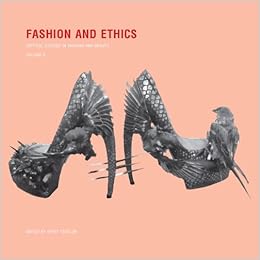
Fashion and Ethics by Efrat Tseëlon (Editor), Intellect Ltd (Feb 15, 2014)

Fashion and Ethics focuses on issues of power, social positioning, and practices among creators, producers, practitioners, wearers, and consumers of fashion. With a special emphasis on the moral fabric of clothing, contributors to the book offer a critique of some of the fundamental assumptions of ethical fashion and expose how products are often framed as fair trade in order to relieve consumers’ guilt.

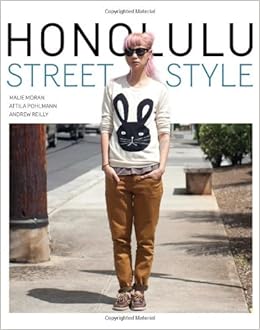
Honolulu Street Style by Malie Moran, Attila Pohlmann and Andrew Reilly, Intellect Ltd  (Feb 15, 2014)

Hawai’i is one of the most ethnically and racially diverse places in the world due to its central location in the Pacific. Situated at the crossroads of different cultures, Honolulu has a style all of its own. Honolulu Street Style captures this unique approach as it demonstrates how global trends are transformed by stylish Honolulu denizens to give them a unique, local look. Divided into chapters on hair, hats, accessories, and beachwear, the book features the styles of people encountered on the street and in many different neighborhoods, with an essay on the history and clothing of Hawai’i as a whole.

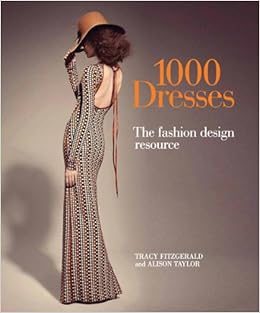
1000 Dresses by Tracy Fitzgerald and Alison Taylor, Barron’s Educational Series (Mar 1, 2014)

The study of the dress can reveal a wealth of information that can epitomize an era and provide insight into the historical, social, and cultural context of the time. Here, in this comprehensive library of 1,000 garments, the authors explore and document all aspects of the dress, from its evolution and impact on the fashion industry to its ability to move from functional garment to art form. A directory of dresses is organized by style, with variations for each. Cut, construction, embellishments, proportion, symmetry, volume and more are reviewed.

Continue Reading

Important New Books on Fashion in Museums from Yale

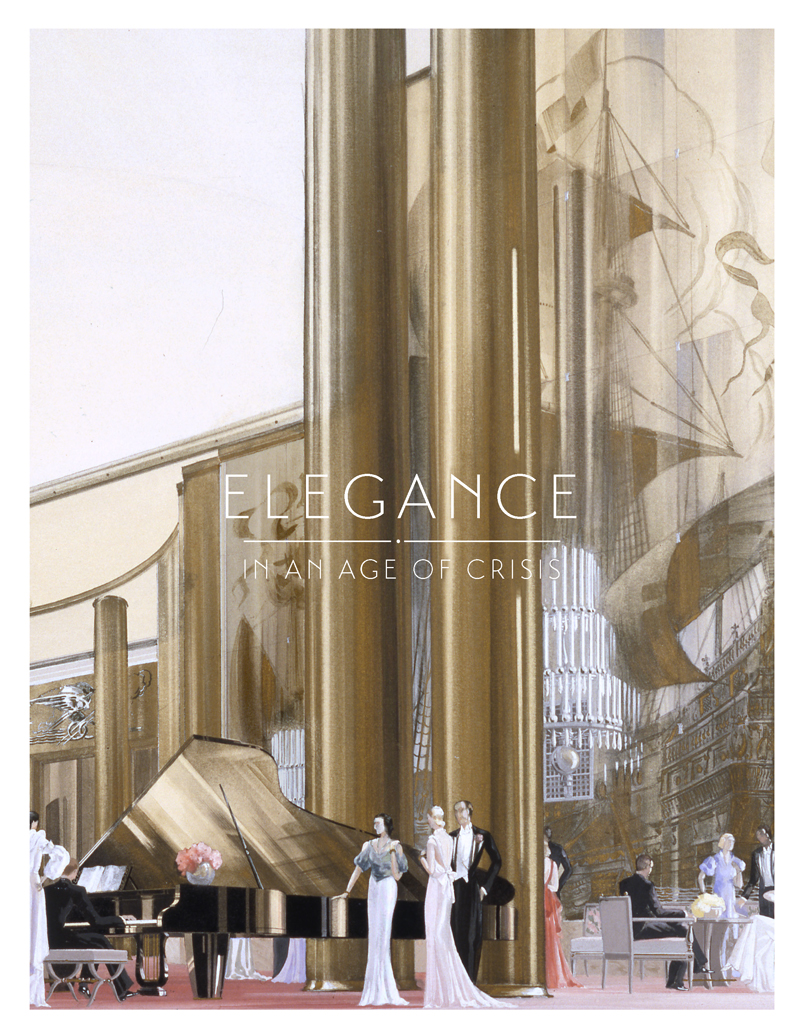
The pace of fashion publishing continues to impress me. When I was in graduate school, new and important fashion history books were few and far between. But now, it’s hard to keep up! Yale Press, in particular, continues to set the bar high for new and necessary books for the fashion historians library. Aside from the new Charles James: Beyond Fashion from the Metropolitan Museum of Art’s current exhibition in New York (a MUST have and a MUST see, if you can), there are a few others that you might not have heard about. Elegance in an Age of Crisis: Fashions of the 1930s, edited by Patricia Mears, is an excellent resource and documents the recently closed exhibition from the Museum at FIT (Nadine Stewarts review of that show is available here).

Exhibiting Fashion: Before and after 1971 by Judith Clark and Amy de la Haye is an extremely important work for the field, and something that has been needed for quite some time. It chronicles the work of curators such as James Laver (1899-1975), Doris Langley Moore (1902-1989) and Anne Buck (1910-2005) in several case studies. It also discusses, at length, the importance of Fashion:An Anthology the exhibition at the Victoria and Albert by Cecil Beaton in 1971,

Additionally, it provides an admittedly incomplete inventory of fashion exhibitions since 1971. While Lou Taylor’s book, Establishing Dress History does much to document fashion collections and their history in text, Clark and de la Hayes’ book not only discusses the history of exhibitions of fashion, but does so in an oversized, illustrated volume (including photos of historic exhibition catalogs, as well as installation photos).

The inventory of exhibitions focuses primarily on major exhibits from England, Australia, France, Canada, and the United States (although a few from the Netherlands, Sweden, Japan, Italy, Germany, Belgium are also included). The U.S. exhibits listed were held primarily in New York and Philadelphia; though it does also list some from Boston; Kent, OH; Saint Paul, MN; Phoenix, Los Angeles, and San Francisco (It doesn’t begin listing exhibits from the de Young until the year 2000 and The Museum at FIDM’s first listing is in 2003). My feeling is that this book leaves the door open for further work on the history of fashion collection and exhibition in the United States.


Continue Reading
1 5 6 7 8 9 34