That Medieval Bra Business…

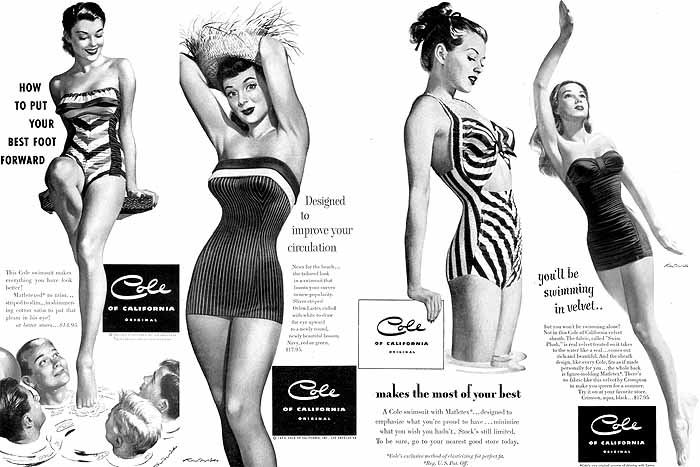
Lengberg Castle, East-Tyrol: 15th century linen “bra” in comparison to a longline-bra from the 1950´s

I don’t know how many of you read the CSA “Communities for the Study of Dress and Fashion Forum” Listserve, but there was quite a lively discussion last week about the now well-known 15th century ‘lingerie’ found in an Austrian castle. The most commonly cited article being from the Daily Mail, By Dalya Alberge. Much of the discussion on the forum was about the vocabulary being used: “bra,” “lingerie,” and other phrases normally used to describe twentieth and twenty-first century undergarments (not to mention hyperbole and sensationalistic writing). Listserve writers complained about the loss of educational opportunity, as well as the lack of contextualization for these pieces.

This University of Innsbruk article on the find, provides a little more of the cut-and-dry information of what was found, but here again also only uses modern-day terms to describe the objects (aside from a passing reference to a “Mieder” (German for corselette).

A woman hits her husband and puts on his underpants while he winds yarn in an engraving by Israhel van Meckenem, late 15th century.

The most informative article however, published a few days ago in the BBC History magazine, goes into considerable depth and provides a lot more context. That might be because it is written by Beatrix Nutz, a researcher at the Institute of Archaeology, University of Innsbruck (She is writing her thesis on the textiles from Lengberg). For example, Nutz explains:

There are some written medieval sources on possible female breast support, but they are rather vague on the topic. Henri de Mondeville, surgeon to Philip the Fair of France and his successor Louis X, wrote in his Cyrurgia in 1312–20: “Some women… insert two bags in their dresses, adjusted to the breasts, fitting tight, and they put them [the breasts] into them [the bags] every morning and fasten them when possible with a matching band.”

Nutz’s long, in-depth article is full of citations, quotes, and references – proving much more educational and satisfactory to this historian. She even provides the more accurate term, “breast bags” to describe the bra-like undergarments, and helps to fill in a lot of the gaps left by the more sensationalized articles. Hopefully, her work will seep into the general consciousness, despite its lack of sensationalism.

Feel free to leave your comments below.

Continue Reading

San Francisco Silent Film Festival: today – July 15, 2012

Louise Brooks in Pandora's Box (1929)
The Spanish Dancer (1923) costume sketch by Howard Greer (AMPAS)

Starting this evening, the San Francisco Silent Film Festival begins with a showing of Wings (1927) – a film about a lady aviator (or ‘flyer’) starring ‘it girl” Clara Bow. It is one of my favorite silent films, the story AND the costumes are great. Stella Dallas (1925), Mantrap (1926), Spanish Dancer (1923) and Pandora’s Box (1929) are some other favorites with great clothes and great characters. These — plus, the Mark of Zorro (1920) and The Cameraman (1928) with Buster Keaton–make this a killer line-up. The full list of films is below, do yourself a favor and go !

(More details are available here)

17th Annual
San Francisco Silent Film Festival
July 12-15 at the Castro Theatre, San Francisco

View the Full Program Now! Tickets & PassesNow on Sale!

Thursday,
July 12
7:00 pm Opening Night Film
WINGS (1927)
9:30 pm Opening Night Party at
McRoskey Mattress Company
Friday,
July 13
10:30 am Amazing Tales from
the Archives
1:00 pm LITTLE TOYS (1933)
4:00 pm THE LOVES OF PHARAOH (1922)
7:00 pm MANTRAP (1926)
9:15 pm THE WONDERFUL LIE OF NINA PETROVNA (1929)
Saturday,
July 14
10:00 am FELIX THE CAT SILENT CARTOONS (1925-1929)
12:00 noon THE SPANISH DANCER (1923)
2:30 pm THE CANADIAN (1926)
5:00 pm SOUTH (1919)
7:00 pm Centerpiece Film
PANDORA’S BOX (1929)
10:00 pm THE OVERCOAT (1926)
Sunday,
July 15
10:00 am THE MARK OF ZORRO (1920)
12:00 noon THE DOCKS OF NEW YORK (1928)
2:00 pm EROTIKON (1920)
4:30 pm STELLA DALLAS (1925)
7:30 pm THE CAMERAMAN (1928)
Continue Reading

Undergardments: 1920-1929


c1925: Slips and bloomers, fashionable in the 1920s, and a corset, worn during the Victorian era.

The boyish silhouette of the 1920s required special undergarments. Generally, a bandeau was used to flatten the bust with a single piece of fabric. Corsets and girdles were still heavily boned. Corset substitutes were made of softer elastic and referred to as “step-ins.” Specialty corsets were created for wear during sports, dancing, and even pregnancy. Towards the end of the decade, as a natural shape became more popular, brassieres with cups and mild shaping were developed.

Loose-fitting bloomers or knickers were made of silk or rayon and were gathered just above the knee.  They came in a number of forms including one-piece camiknickers, teddy’s, step-ins, or just plain drawers (which resembled slightly flared, bifurcated skirts).  During the early years of the 1920s, calf-length petticoats were worn, but as hemlines rose, these garments were rendered obsolete.

Sources


Laubner, Ellie. Fashions of the Roaring Twenties. Atglen, PA: Schiffer Publishing Co., 1996. 15-17

Mendes, Valerie and Amy De La Haye. 20th Century Fashion. London: Thames & Hudson, 1999. 65

Riordan, Teresa. Inventing Beauty, New York: Broadway Books, 2004. 87

Continue Reading

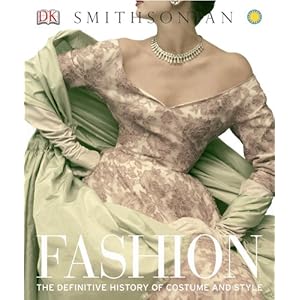
I’m in Print! “Fashion: The Definitive History of Costume and Style”

Due out in October of 2012, Fashion: The Definitive History of Costume and Style (DK publishers) was a joy to be a part of this past April and May.

I contributed several sections – including some writing on mod fashion, 1950s ball gowns and cocktail dress, as well as section on 1970s women’s trousers. You can pre-order a copy on Amazon now and get $20 off…


Continue Reading

July 4, 1933: Amelia Earhart in Los Angeles

July 4, 1933: "Ruth Nichols and Amelia Earhart in Try for New Records.Los Angeles, California: Amelia Earhart (left) and Ruth Nichols (right), two of the nations' foremost women fliers, seen as they attended the last day's events of the National Air Races at Los Angeles, July 4th. They will attempt to establish a new transcontinental speed record for women in a flight from west to east, taking off from Los Angeles, July 6th."
Continue Reading

I’m in Print: Sunday Times of London (History of High Heels)

(Click to read the first page of the article)

A few weeks ago, Matt Rudd of the Sunday Times of London asked me for a statement on the history of high heels. Though he didn’t quote me exactly, he did quote me first in his column, “God of Small Things” yesterday. For your reference, here’s the complete version of what I told him:

High heeled shoes have been around nearly as long as human civilization – with the first depictions of elevated shoes (a pre-cursor to the high heel) appearing as ceremonial dress in ancient Egyptian murals dating as far back as 3500 BC, and worn by both men and women of the upper classes. Generally, the popularization of the high heel is attributed to Catherine de Medici who – at only five feet tall – was eager to increase her appeal both to her husband and to the nation of France. Since that time, heels have often been associated with French high fashion – including France’s King Louis XIV who introduced the ‘red soled heel’ that Christian Louboutin has since co-opted as a signature element.”

Download the full article here (pdf)

Continue Reading

Teaser Tuesday: Ladies Hoola Hooping in Lingerie (1958)

Hula Hoop is 54 today " ** FILE ** Two models gracefully swing their new Hula-Hoops as they display the latest bodice creations in lingerie at a fashion show in Frankfurt, Germany, Oct. 21, 1958. It's hard to believe in age of action-packed video games and other whiz-bang gadgets, the Hula Hoop once was the hippest toy around. The hoopla started 50 years ago Thursday, June 19, 2008 when entrepreneurs Richard Knerr and Arthur "Spud" Melin sought a trademark for a plastic cylinder that had inspired by a similar toy that had enjoyed modest success in Australia's school yards. (AP Photo/Riethausen)"
Continue Reading

My Fair Lady (1964): Make-up and Hair

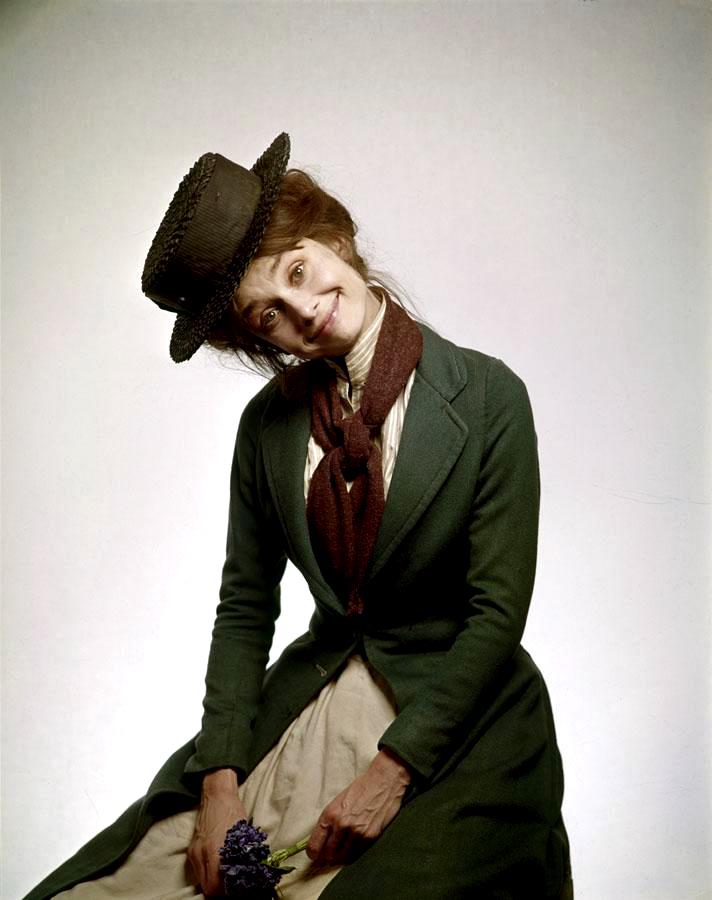
Audrey Hepburn as Eliza Doolittle (My Fair Lady, 1964) Costumes by Cecil Beaton

“The makeup people, led by the Westmore brothers, did a fine job de-glamorizing Audrey, with [Cecil] Beaton’s cooperation. Her hair had to be filled with an unpleasant substance known as Fuller’s earth—which was quite toxic—and she had to wear a special kind of kohl makeup and a drab foundation to make her look sallow and underfed. For the tests she also had to undergo the blackening of her fingernails and the backs of her hands, and her clothes were deliberately made large so that her frail figure would disappear in them…

Every scene had to be tested in costume again and again because the essence of the movie lay in the gradual transition of Audrey from goose to swan. Beaton stood over her like a Svengali, ordering, in his own words, ‘Strands of her hair to be placed in this direction or that, suggesting more or less eyelash, selecting a brooch or a trinket.’ Every hairstyle had to be argued over and decided upon. Finally, Audrey and Beaton jointly settled on Edwardian bangs like those worn by the famous British music hall star Gertie Millar. Audrey risked having her face look even more square than usual because she wanted total period authenticity, and deeply respected Beaton’s taste and experience…

She had particular fun choosing the right hat for the ascot scene. She and Beaton finally chose one that was replete with cloth poppies and antic bows and would tremble when she jumped up to see the horses.”

–Charles Higham, Audrey: The Life of Audrey Hepburn, New York: Macmillan Publishing Company, 1984.


Continue Reading