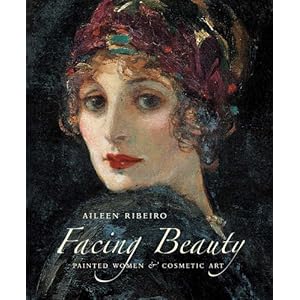
Facing Beauty: Painted Women and Cosmetic Art
By Aileen Ribeiro
Yale University Press (November 29, 2011)
Though I haven’t yet seen it in person – it can only be good. It’s Aileen Ribeiro, right?

THE HISTORY OF FASHION. . . MOSTLY.
Facing Beauty: Painted Women and Cosmetic Art
By Aileen Ribeiro
Yale University Press (November 29, 2011)
Though I haven’t yet seen it in person – it can only be good. It’s Aileen Ribeiro, right?
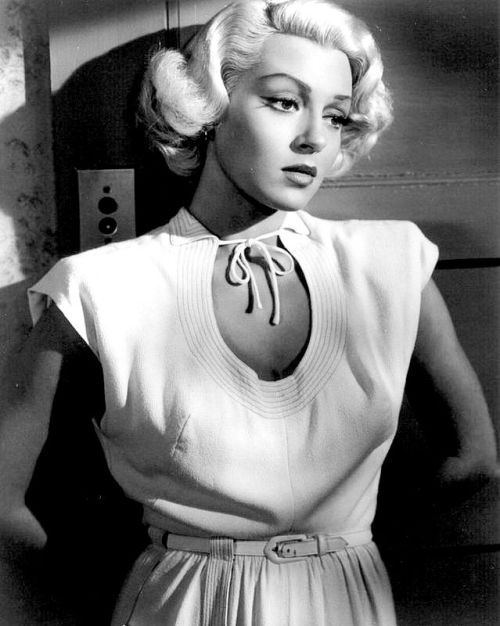
“[Lana Turner] already had platinum hair. She’d been that color. So we left it for the film [The Postman Always Rings Twice, 1946]. The white clothing was something that Carey and I thought of. At that time there was a great problem of getting a story with that much sex past the censors. We figured that dressing Lana in white somehow made everything she did seem less sensuous. It was also attractive as hell. And it somehow took a little of the stigma off of everything that she did.
–Director Tay Garnett, quoted in Joe Morella and Edward Z. Epstein, Lana: The Public and Private Lives of Miss Turner, New York: The Citadel Press, 1971. p. 80
 Moda a Firenze 1540-1580: Cosimo I de Medici’s Style (English and Italian Edition)
By Roberta Orsi-Landini (Author)
Publisher: Edizioni Polistampa; Bilingual edition (October, 2011)
Somehow, this one slipped through the cracks for October. Some of you will remember that I wrote a little piece on the Medici’s when the Isabelle de Borchgrave exhibit was at the Legion of Honor. Here I took a brief look at Agnolo Bronzino of Eleanor of Toledo (1522–1562), the wife of Cosimo I de’ Medici. The Medici family’s had a Papal monopoly on Alum and Eleanor of Toledo employed her own weavers.
Now there is a new book out on Cosimo I de Medici’s wardrobe, written by Roberta Orsi Landini, a textile and costume scholar, who has worked for over 20 years on the textile and costume collections at the Pitti Palace in Florence. Her work here is likely to be of great importance to the study of fashion and textile history.
Other works by Roberta Orsi Landini:

 Fabricating Consumers: The Sewing Machine in Modern Japan
by Andrew Gordon
University of California Press (Nov. 1, 2011)
Written by Andrew Gordon, an expert in Japanese social history and a prestigious professor at Harvard University, this new book – Fabricating Consumers: The Sewing Machine in Modern Japan– shows how the ‘humble’ sewing machine dramatically changed life and society in Japan. It discusses the Singer sewing machine specifically, and shows how the machine in general “not only transformed manners of dress but also helped change patterns of daily life, class structure, and the role of women.”
Stays and Body Image in London: The Staymaking Trade, 1680-1810
by Lynne Sorge-English
Pickering & Chatto Ltd (June 30, 2011)
At the recommendation of Mark Hutter, I recently acquired this new(ish) book, Stays and Body Image in London: The Staymaking Trade, 1680-1810 by Lynne Sorge-English. For those academics studying this time period, it is a good resource with unique analysis. The author uses surviving examples of stays in various collections, to explore how this garment and its manufacture changed over time. Interestingly, it examines how women’s health was affected due to prolonged use. The book combines both material analysis with literary analysis (an eighteenth-century staymakers diary) along with cultural and social history. Important to note, however – this is not a photograph-heavy book, but is a true research resource.

“I played the prostitute [in Grand Hotel, 1932] and I felt that a more sensuous look was needed. Full, natural lip line and generous eyebrows—no bra, no girdle. Definite features were called for, and I found that I liked that look so much that I kept it.”
–Joan Crawford, My Way Of Life. New York: Simon and Schuster, 1971. 159.
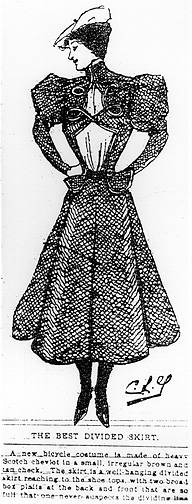
Read the full article here.
“After I got the role of Bonnie [in Bonnie and Clyde, 1967], Arthur [Penn] and I started talking about what she might wear. I thought jeans, maybe, pants of some sort since they were robbing banks and making quick getaways. But Warren [Beatty] and Arthur wanted to put her in dresses, great costumes that would give her style. They had decided to give Theadora Van Runkle, who was a young sketch artist with a great eye, a shot at designing the costumes. Soon after I met Theadora, who was to affect my own sense of style and become a good friend during these fast times. Until I met Theadora, clothes, and getting to a certain look, creating an effect had just been part of the job. She taught me just how much fun it can be. I like Theadora immediately. She was smart, funny, a very independent spirit, and a genius when it came to clothing design.”
— Faye Dunaway. Looking for Gatsby: My Life. New York: Simon & Schuster, 1995. (128-129)
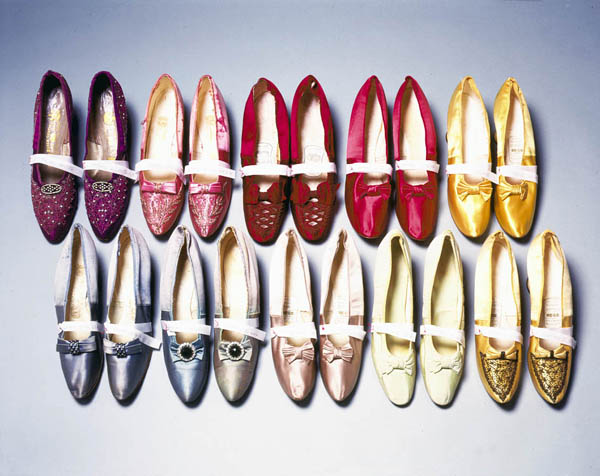
“Voids in fashion scholarship can be partly explained by the fact that the study of dress often carries negative associations. The traditional study of dress history has been largely based on old art-historical methods of stylistic analysis, without integrating this with economic or social history. A contributing factor is that there is little formal academic training that addresses fashion or costume history; and fashion has to fight to gain recognition as a legitimate area of study.”
— Alexandra Palmer, Abstract for “New Directions: Fashion History Studies and Research in North America and England”, Fashion Theory: The Journal of Dress, Body & Culture, Volume 1, Number 3, August 1997 , pp. 297-312(16)
(“The article compares the teaching of fashion history in England and North America, and Palmer uses some sample case studies to illustrate the validity of employing a multidisciplinary methodology that is based on material culture. She concludes that material culture analysis has to be set within a broader academic framework and not just be for its own sake. Liaison with scholars in other areas should be encouraged, as it is through cross-disciplinary interaction that more dynamic research can be pursued.”)
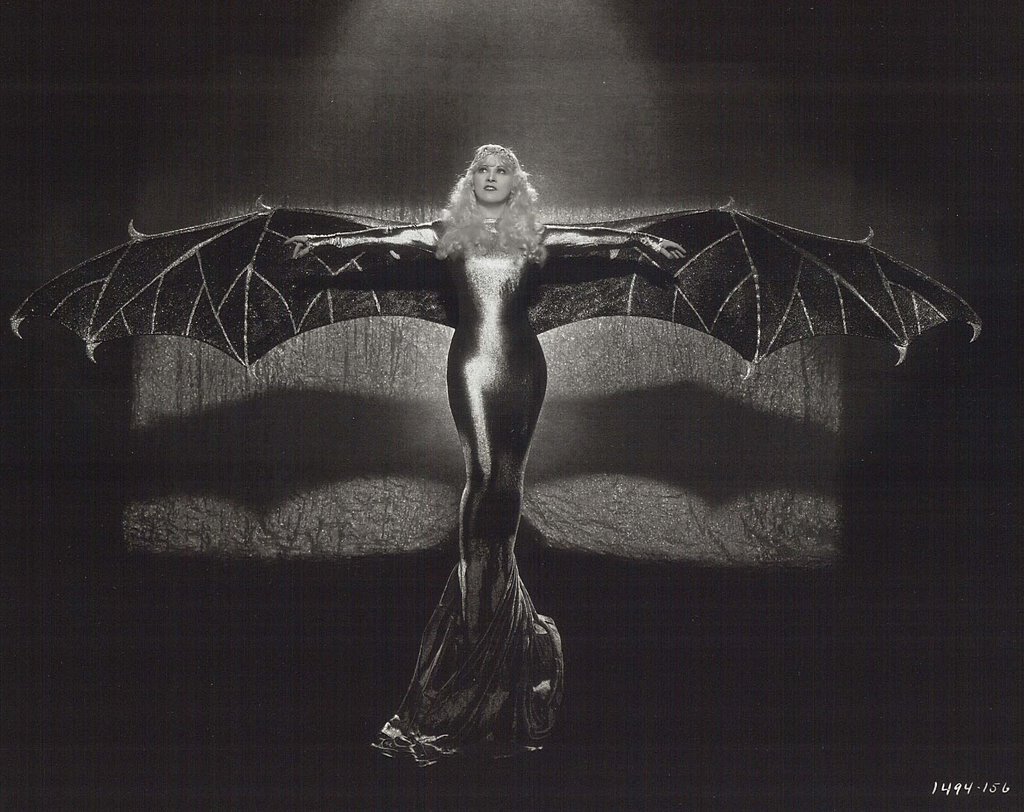
Author Maurice Leonard explains that for Mae West, “her rotundity was exaggerated by her shortness. Giving vent to her frustration to Ruth Biery, she complained that Hollywood had tried to alter her shape when she had first arrived, and viewed the slim Hollywood beauties around her with dissatisfaction:
“I never saw so many poles in my life! I wondered how Hollywood men could stand them. But everyone said I had to get thin. I figured they knew this racket and I didn’t, so I went on one of them Hollywood diets…It was pretty bad, but I’d been through a lot for art’s sake so taking off twenty pounds or more was just one more piece of the routine. I got down to 103 pounds. I stood in front of the mirror to study the results. I didn’t like it. I didn’t look—well, you know, voluptuous. And that isn’t all, I didn’t even look healthy. And man or woman, you got to look healthy to look right. Half-starved women can’t have no life in them any more than a half-starved dog.”* (141)
–Maurice Leonard in Mae West: Empress of Sex. New York: Birch Lane Press, 1991. 141.
*Mae West in Movie Classic, April 1934.
“The ephemeral nature of fashion distinguishes it from other modes of dress such as ceremonial, occupational and ethnographic. . . . Fashion’s inherent obsolescence, whereby clothes are discarded on the basis of the desire for stylistic novelty rather than for utilitarian reasons, generates passionate response from consumers and theoreticians alike. Fashion has been held up to ridicule, dismissed as a merely frivolous aesthetic phenomenon – since it is forever changing, it can be of no lasting value. . . Fashion has attracted the attention and endorsement of an expanding range of academics, increasingly fascinated by its multi- and inter-disciplinary significance. Thus the work of psychologists, anthropologists, economists, philosophers, sociologists, theatre and film designers, as well as dress historians, has bestowed an academic validity to fashion.”
— Valerie Mendes and Amy De La Haye, 20th Century Fashion (1999)