Three ready-to-wear dresses, dating from 1942, brought the allure of the Hartnell name to the general public during World War II; Hartnell sporting the British Home Guard uniform in the salon at 26 Bruton Street. (Via Pointed Leaf Press)
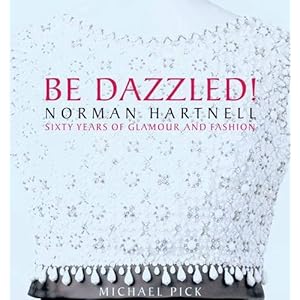
For this new book, author Michael Pick utilized unlimited access to the Hartnell archives and provides insights into the designers life and career – including his royal clientele (Queen Elizabeth, Princess Margaret, and lesser Royals). It includes not only examples of his garment design, but also includes shoe designs, as well as “descriptions and swatches from Hartnell’s personal workbooks detail his designs from the Queen’s wardrobe from the 1953-54 Royal Tour.” TBe Dazzled! Norman Hartnell: Sixty Years of Glamour and Fashion will likely appeal not only to design history buffs and fashion historians, but also to followers of the British Royals. Enjoy!
I was wandering around Amazon yesterday and discovered a handy list that tells you exactly which new or about-to-be-released books on fashion are already their top sellers. Not only does it indicate what’s about to be a hot topic, it also helps fashion book-horders like myself save money (pre-ordering through Amazon can save you as much as 40% off the regular price). Anyway – here are just a few of the current top sellers:
Book description: “Cecil Beaton was a man of dazzling charm and style, and his talents were many. At the age of twenty he sent Vogue an out-of focus snap of a college play, and for the next half-century and more he kept readers of the magazine up to date on all the various activities of his career. Condé Nast, the owner of Vogue, convinced Beaton to abandon his pocket Kodak, and his resulting photographic work earned him a place among the great chroniclers of fashion. Witty and inventive, he also designed settings for plays and films—and for himself—and as a writer he was an eloquent champion of stylish living. This book includes articles, drawings, and photographs by Beaton dating from the 1920s to the 1970s. Beaton loved Vogue, and his contributions testify to the wit, imagination, and professionalism that he and the magazine always had in common.”
By Stefano Catalani, Jeannine Falino, and Janet Koplos
Available: March 1, 2012 (though Amazon seems to be out of stock)
Book description: “Over the past 40 years, Mary Lee Hu has affirmed her distinctive voice in the world of jewelry with her elegant, voluptuous creations. Using wire the way hand weavers use threads, Hu has blazed a trail as both artist and innovator, exploring the nexus between metalsmithing and textile techniques, often through the recovery of historical precedents from an ancient past, and inspired by her innate aspiration to perfection and her stubborn curiosity. Hu’s apparently effortless and graceful creations, resulting from twining, weaving, knotting, and braiding, investigate both the possibilities and limits of wire by melding fiber art and jewelry, structure and pattern, light and line. Knitted, Knotted, Twisted, and Twined features exquisite earrings, rings, brooches, and neckpieces drawn from public and private collections internationally. The book traces the evolution and refinement of Hu’s processes and skill from her earliest experimental pieces in the late 1960s–capturing the spirit of a time when craft and lifestyle were so passionately intertwined–to the confidence and movement of her contemporary creations.”
Book Description: “Although separated by time, Miuccia Prada and Elsa Schiaparelli—both Italian, both feminists—share striking affinities in terms of their design strategies and fashion manifestoes. Presented as an intimate “conversation,” Schiaparelli and Prada: Impossible Conversations aims to tease out formal and conceptual similarities between the two designers. Striking photographs and insightful texts illustrate the parallels between the two, including their preferences for interesting textiles and prints, eccentric color palettes, and a bold and playful approach to styling and accessories. Schiaparelli, in the 1920s through 50s, and Prada, from the late 1980s to today, exploited the narrative possibilities of prints, sought out unconventional textiles, played with ideas of good and bad taste, and manipulated scale for surrealistic outcomes. Contemporary art plays a major role in the work of these inventive women—Schiaparelli in her famous collaborations with Dali and Cocteau, and Prada via her Fondazione Prada. Blending the historic with the contemporary, the catalogue brings the masterworks of both designers together into a grand conversation between the most important women fashion designers to ever emerge from Italy.”
Originally titled, Orchids on Your Budget when it was published in 1937, this reprint of the depression era, no-nonsense advice book is a good read – both for the economically challenged and those craving a greater understanding of women’s lives in the 1930s.
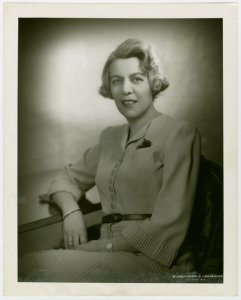
Author Marjorie Hillis via NYPL
Author Marjorie Hillis (1889-1971) was already a best-selling author when this book came out. Her 1936 book, Live Alone and Like It, “sold 100,000 copies at a time when almost nobody had two pennies to rub together.” (New York Times Review of Books, 1981). She was well-known for her pithy, straight-talking style advice that had been featured in both Good Housekeeping and Vogue.
“A new mode is a complicated thing. It’s made up of colors and fabrics and skirt lengths and waist lengths and relative proportions and a hundred details. The untrained woman’s eye doesn’t take them in at a glance. As a matter of fact, she doesn’t have to take them all in, but she ought to take in more than she does. What usually happens is that a dress or a suit or a coat that is new in every detail looks pretty funny to her. ‘That,’ she thinks, ‘would be fine for Miss Ina Claire or Mrs. Harrison Williams, but I’d look as if I’d gone a little mad if I should wear it.’ She may be right. But she’s not right when, instead, she buys a dress that, in all but one or two new points, has all the familiarity of a dear old family friend. She’ll enjoy wearing it for about six weeks and then, lunching at the country club, she’ll feel suddenly dowdy beside Mrs. Smith’s smart little number.” (37-38)
Hillis goes on to offer advice for building a wardrobe based on practicality and longevity, warning against organdy and velvet evening frocks, and focusing on those that can be used for multiple purposes. Here is her take on the “Little Black Evening Dress“:
The Little Black Evening Dress is, of course, the great standby of nine-tenths of the economically minded women in the country, and it has done its part nobly for a couple of decades. It doesn’t soil easily, isn’t remembered like a color, is appropriate anywhere, and can be varied by contrasting jackets, jewels, flowers, scarfs, and slippers till it dies on its feet. The idea may not excite you, but if you’re really going in for saving money, you’d better get one anyway. In a few short months, you’ll probably love it like a sister, though you would be heartily sock of anything else.” (48)
For a 1937 review of the book from the Oakland Tribune, read this:
Young, Marian. "You To Get the Little Extras Out of Life," Oakland Tribune: 1937 Aug 20, pg. 73
From the Exhibition, Between East and West: Folk Art Treasures of Romania (Mengei International Museum in San Diego)
Joyce Corbett, curator at the Mengei International Museum in San Diego, sent me this notice of a tour she is leading to explore the folk art of Romania. For a quick preview of what you’ll see on the tour, check out my photos from last year’s exhibition Between East & West: Folk Art Treasures of Romania.
Below is the description and registration information for the tour that Joyce is planning:
THE FOLK TREASURES AND HERITAGE OF ROMANIA
May 29-June 10th, 2012
Join us for a journey back in time as we experience the history, folk culture and legendary sites of the Transylvanian Carpathians, Maramures and Bucovina. We’ll travel through the Romanian countryside to enjoy a close-up look at the several cultures of Romania: Hungarian, Romanian, Saxon, Jewish and Roma. We’ll visit UNESCO World Heritage sites, see the beautiful wooden architecture and gates of Transylvania and Maramures, experience the ancient painted monasteries of Bucovina, and stroll through Saxon German medieval towns, fairy-tale castles and quaint villages. We’ll see craftspeople practicing traditional folk arts. We’ll look at collections of regional embroidered textiles and costumes, enjoy performances by folk dancers and Roma musicians and sample wines from local vineyards. We’ll also stop at the largest regional fair in Transylvania, where village people sell local wares, and folk art. .Our tour includes: comfortable lodgings in pensions and hotels, hearty breakfasts and dinners featuring regional specialties, wine tastings in local cellars, all transportation in our private bus, plus all site entrance fees. We will have our own experienced English-speaking Transylvanian guide, a local expert on the history and culture of the region.
Land Only Price: $2999.
For detailed itinerary and information, contact Joyce Corbett joyce-dot-corbett-at-yahoo-dot-com or call 619-825-9590.
Covering 1900 to the present, 100 Ideas that Changed Fashion by Harriet Worsley provides a creative and concise overview of fashion history. It is a part of the “100 ideas” series from UK publisher Laurence King (distributed by Chronicle Books in the US). Other books in the series will discuss architecture, graphic design and film.
In 100 Ideas that Changed Fashion, author Harriet Worsley provides very brief, but highly illustrated entries arranged chronologically. This title is similar in structure to a number of small but sweeping overviews of fashion history, including:
This new work not only brings us up-to-date (2010), but also presents the history from a unique vantage point. To quote Worlsey’s introduction, “each idea had to be something that rerouted the course of fashion and without which womenswear would not be what it is today.” (6)
The end result is a well-curated and highly synthesized work presenting not only key inventions (such as nylon and the zipper), but also their trajectory: That is, how these ideas shaped and changed future fashion along a timeline. Politics, economics, material culture and history also played key roles in the selection of entries. While some of the entries are tride-and-true staples of fahsion history texts (“Bias Cut,” “Little Black Dress,” “Chanel No. 5”), other entries are unexpected, more inclusive and decidedly welcome (“Protest Dress,” “False Eyelashes,” “Raw Photography,” “Logo Worship,” “Deconstruction and Antwerp,” “Dance Dress,” and “Black is Beautiful”). These new additions provide a breadth and depth of history – especially in regards to ethnic diversity that is often missing in similar works.
This is not to say that the book is without problems – a lack of footnotes and skimpy bibliography are two notable issues for the die-hard historian. There are also some odd repetitions between entries (such as separate entries for “Celebrities” “Hollywood and the Talkies”, and “Pop Stars” as well as “Influential Street Fashion” and “Streetwear”). Conversely, there are entries that might be a little too sweeping (“Sport,” “Hip Hop,” “Global Influences,” and “The Internet”).
These issues notwithstanding, 100 Ideas that Changed Fashion furthers the ongoing conversation about fashion history’s most significant contributions. It is a welcome addition to the body of literature aimed at making material culture and fashion history digestible to an average reader .
Here’s a brief sample to wet your appetite:
“Idea No. 24: False Eyelashes
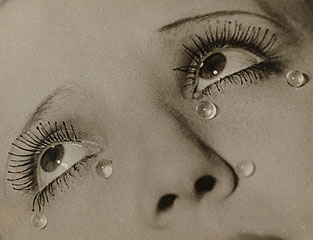
Where would flirtatious brides and red-carpet beauties be today without their false eyelashes? Some of the first falsies were created in 1916 by the American film director D.W. Griffith for his leading lady, Seena Owen.
Glass Tears by Man Ray (1932) Via Getty Museum
He wanted her lashes to be so long that they brushed her cheeks when she blinked. Griffith asked a wig-maker to attach some interwoven human hair to a fine piece of gauze, which was glued to her eyelids. The effect was extraordinary.
However, it was not until several decades later that false eyelashes really took off for the woman on the street. They became popular in the 1950s, and by the 1960s were a fashion essential. Lipstick was worn pale, meaning that he focus of the face had to be a pair of childlike wide yes. The waif-like supermodel Twiggy often wore false eyelashes above and below her eyes, or sometimes attached to her bottom lashes alone. The model Jean Shrimpton and actresses Marianne Faithfull, Sophia Loren , and Elizabeth Taylor were all renowned for their luscious lashes, and the singer Dusty Springfield became known for her ‘panda-eyed’ look.
The 1960s versions were made of bristle-like plastic: Their staying power was limited, and they tended to fall off. Salvation came in the 2000s when the Japanese invented individual fake lashes that could be glued on to real eyelashes, one by one. These were like hair extensions for the eyes, lasting up to two months. Today false lashes are as popular as earrings and lipstick. Shu Uemura created a set of paper-clip style lashes with Dutch fashion designers Viktor & Rolf, and in 2009 the UK band Girls Aloud launched their own range of false lashes in collaboration with Eyelure. Flirting has never looked so good.” (55)
Daniel Miller, an Anthropolgoist at the University College London and Sophie Woodward, a Sociologist at the University of Manchester have teamed up to present a new book in the denim history catalog: Blue Jeans: The Art of the Ordinary.
Here is a brief excerpt from the introductory chapter, explaining how this book fits within the others on this subject:
“Other publications have covered ground different from that explored in this volume, such as the history of denim, its production, and sale [See Global Denim, also by Miller and Woodstock]. By contrast, the present volume focuses on our ethnography of possessing and wearing jeans. Still, the central question behind all these research projects remains: why jeans? For many this would appear to lead naturally to the route of historically tracing the origins of jeans. Indeed, much of the literature on denim and jeans falls within the disciplinary rubric of history (and often popular history). This includes the histories of both indigo and the textile denim. The former traces the origins of the blue color of denim to the mere happenstance that the plant-based dye indigo fixes its color to cloth without needing a mordant, the substance that is used to fix other dyes to cloth. This is what made indigo one of the key world crops from ancient times to colonial times [See Indigo by Balfour-Paul 1998; and “Redeeming Indigo” by Taussig in Theory Culture & Society, 2008). There is an equally well established history of cotton, which alongside indigo would give us an understanding of many aspects of human history, from the global evolution of political economy down to periodic fashions and styles in almost any part of the world [See The Spinning World by Riello and Parthasarthi 2009; South Carolina Cotton Museum 2007]. There is also now a well-established historical perspective on blue jeans more generally, from the patenting of the rivets by Levi Strauss to the icons James Dean, Marilyn Monroe, and John Wayne [See Jeans: A Cultural History of An American Icon by Sullivan 2006). (page 5)
Beverly Lemire, Professor of History and Henry Marshall Tory Chair at the University of Alberta, recently edited a new research resource, The Force of Fashion in Politics and Society: Global perspectives from Early Modern to Contemporary Times in The History of Retailing and Consumption series with Ashgate Press. It provides ten essays in three sections, that were developed out of a panel at the International Economic History Congress, Hesiki in 2006. That session focused on “Fashion, Material culture and Economic Life: Perspectives Across Time, Place and Politics.”
The three sections are basically: Early Modern Europe, Nineteenth Century, and Global fashion. Sample essays are:
“Fabricating the domestic: The Material Culture of Textiles and the Social Life of the Home in Early Modern Europe” by Giorgio Riello
“Fashion Sprayed and Displayed: The Market for Perfumery in Nineteenth-century Paris” by Eugenie Briot
“Designing, Producing and Enacting Nationalisms: Contemporary Amerindian Fashions in Canada” by Cory Willmott
Here is a bit more on the volume, taken from the introductory chapter, written by Beverly Lemire:
“This interdisciplinary volume contributes to a wider comparative assessment of fashion, a multi-facted phenomenon, expressed in various cultural forms. Fashion as a catalyst of material change, as a visible sign of distinction, has a complex past and an equally dynamic and contentious present. Though fashion’s impact is not restricted to dress, the ebb and flow of clothing styles have historically been the most controversial of all the practices in virtually every cultural community. Political economies and cultural discourses of fashion present equally fertile dynamics, having shaped industries, defined communities and sparked conflicts. yet, the study of fashion is still not comfortably situated within all precincts of the academy. This omission is illustrated, for example, in a recent volume on global history; the absence of ‘fashion’ in the subject index reflects the still partial recognition of this pivotal topic, despite the fact that the themes addressed in this text, like the global trade in sugar or the industrialization of textile production, were themselves shaped by the social and cultural forces of fashion in various regions of the world. Scrutinized and problematized in some academic quarters, fashion is ignored and disdained in others reflecting the historic discomfort with the result. At the same time issues surrounding expressions of fashion have frequently been highly politicized. Gender, institutional and imperial politics were among the dynamics that shaped the scholarly reception of this subject, leading to its acceptance (or rejection). However the tide is turning and the intricate cultural and economic forces underlying this phenomenon are more broadly recognized. The chapters included here reflect this new scholarly trajectory reclaiming fashion from the margins, exploring its cultural, economic and social force across time and place. Fashion has shaped markets, defined material priorities and brought profit or loss to its mediators; the fashion for one commodity over another defined consumer markets. These and other topics are explored in this collection.”
By Luisa V. Yefimova and Tatyana S. Aleshina (Vivays Publishing)
Publication Date: January 9, 2012
For anyone with an interest in the beautiful folk costume and decadent fashions of Russia – this is a sumptuously illustrated, and informative new book from Yefimova and Aleshina.
My interest in Russian fashion stems from both a love of folk costume and detailing (which is copious in this book), from Natacha Rambova’s fascination with Russian culture and arts (especially the Ballet Russes), but also because of the strong Russian ex-patriot influence on Parisian fashion in early 20th century. Given these interests, and the recently opened exhibition on Russia here in California (at the Sonoma County Museum of Art) and the anniversary of Fort Ross (settled by Russians), it seems appropriate to delve deeper.
Written by two staff-members of the State Historical Museum in Russia, both are experts in the field of Russian costume and fashion history. Here’s what the pair have to say on the differences between Country and Town clothing in Russia:
“The history of costume in Russia has one essential feature. At the turn of the 18th century Peter the Great, the young reforming tsar, remotely and uncompromisingly decided the destiny of Russian costume. He forced the upper strata of Russian society by decree to wear European dress. Only the peasants and the Orthodox clergy were excluded from the decree. And so, while the gentry adopted the latest Paris fashions as far as their finances allowed them to, the Russian peasants continued to wear their distinctive traditional garb. Thus costume in Russia was divided into two types: traditional Russian dress and fashionable town clothes of the Western European style.”
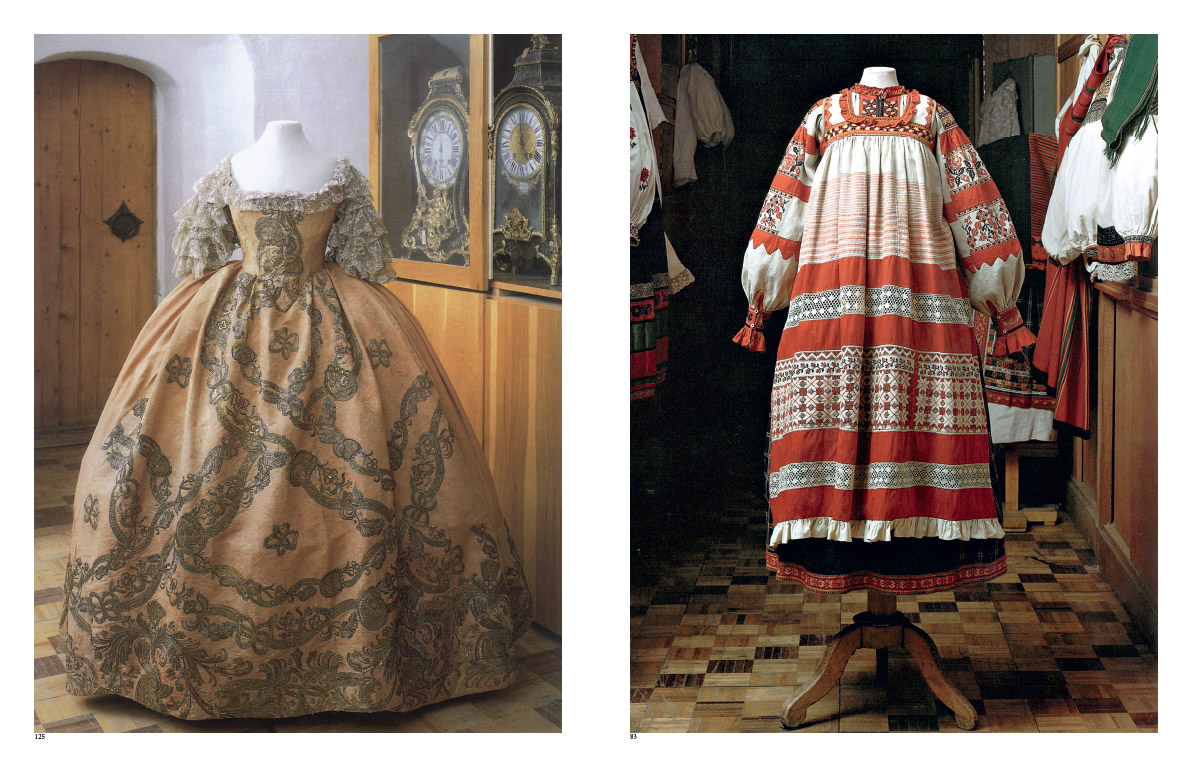
Dress belonging to Empress Elizaveta Petrovna, 1750s, France (left – see note 1) and Peasant Woman’s festive dress, Late 19th-early 20th Century, Yeleski district, Orlov province (right – see note 2).
“All Russian peasants, as well as town commoners and merchants favouring the manners and customs of former times wore traditional Russian dress, which was essentially Russian national costume. Fashionable town clothes were made in the Parisian style, yet not without partiality for bright colours, fancy patterns and a generous amount of trimmings. There was a general fondness for shawls, kerchiefs and wraps, which were skillfully combined with fashionable dress. . .”
Peasant woman's outer dress - corsetka; Late 19th-early 20th century Voronezh province of homespun undyed cloth. (see note 3)
“While national dress and urban costume differed in their basic features, they developed under the same social conditions and evolved in parallel. During the lively celebrations of public holidays on the country estates of the gentry, and at fairs int he towns, aristocrats came into contact with peasants and merchants. By associating with their neighbours and being part of a group containing all kinds of people, those who were interested in costume formed a kind of association. This provided fruitful soil for mutual influence by the folk and town style of Russian costume on each other. Thus, details of fashionable costume such as a low neckline and fully rounded, elbow-length sleeves of the woman’s shirt, and also outer clothes of a fashionable cut became prominent among traditional clothes. At the same time, articles of folk handicrafts such as embroidery and lace began to be used in decorating town clothes.” (8-9)
Much of what is included here corresponds with the notion of country and town influencing each other – and what is evident from the photographs is the appreciation held by all classes for intense detailing and decorative elements – Lace, embroidery, brocade, applique, pearls, fur, beading and quilting appears on every kind of clothing, for all ages and all genders. It is a beautifully produced book – and I’m thrilled to be able to share it.
Image Notes:
1. “Dress belonging to Empress Elizaveta Petrovna, 1750s, Franc. Restored with remnants of a crimson silk suplice. Silk, embroidered with coloured fabric, ornamentation, tinsel, lace. This silk dress from Empress Elizaveta Petrovna’s wardrobe was recreated by the Museun’s restorers from a church vestment. Only its front part, the skirt and part of the bodice survived. It was made of heavy reddish-orange silk of French manufacture with a self-coloured floral pattern. The Museum’s masters restored the dress from the empress’ portraits and fashion plates of the period. It is a ball dress with a narrow bodice compressing the waist and a low-cut neckline both in front and at the back. The elbow-length sleeves are of the French needle lace ‘point d’Argentan,’ and the same lace is used for trimming the neckline.” (112)
2. “Peasant woman’s festive dress, blouse, homespun skirt, apron, late 19th – early 20th century, Yeletski district, Orlov province. The blouse has straight inserts, a short body, with sewn-on collar, long sleeves with frilled cuffs. It was made from homespun linen, decorated with embroidery and cotton threads in a cross. Calico strips were sewn into sleeves. The homespun check wollen skirt, has a woven pattern band at the hem. A sleeveless, straight-cut ‘curtain’ apron with back, was made from homespun red-patterned sackcloth, with sstrips of structural embroidery sewn on, cross-shaped embroidery, lace and calico. Strips of red and white cotton fabric decorate the border of the hem.” (89)
3. “Peasant woman’s outer dress — corsetka. Late 19th-early 20th century, Voronezh province, made from homespun undyed cloth. The foreground shows a Voronezh corsetka seen from the rear – a long garment with knife pleats and decorations on the belt in the form of patterned ‘little discs’ sewn to the cloth. The ends of the sleeves are decorated with embroidery made from factory-made materials.” (95)



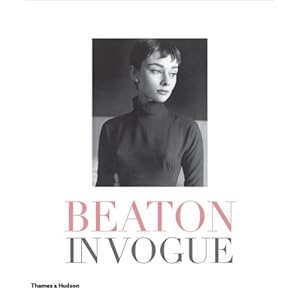 Beaton in Vogue By Josephine Ross
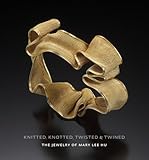 Knitted, Knotted, Twisted, and Twined: The Jewelry of Mary Lee Hu
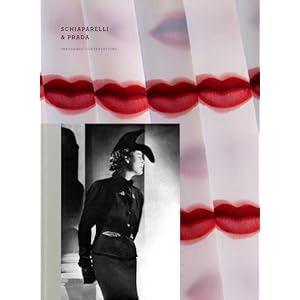 Schiaparelli and Prada: Impossible Conversations (Metropolitan Museum of Art)


 Covering 1900 to the present, 100 Ideas that Changed Fashion by Harriet Worsley provides a creative and concise overview of fashion history. It is a part of the “100 ideas” series from UK publisher Laurence King (distributed by Chronicle Books in the US). Other books in the series will discuss architecture, graphic design and film.
“Other publications have covered ground different from that explored in this volume, such as the history of denim, its production, and sale [See Global Denim, also by Miller and Woodstock]. By contrast, the present volume focuses on our ethnography of possessing and wearing jeans. Still, the central question behind all these research pro
jects remains: why jeans? For many this would appear to lead naturally to the route of historically tracing the origins of jeans. Indeed, much of the literature on denim and jeans falls within the disciplinary rubric of history (and often popular history). This
includes the histories of both indigo and the textile denim. The former traces the origins of the blue color of denim to the mere happenstance that the plant-based dye indigo fixes its color to cloth without needing a mordant, the substance that is used to fix other dyes to cloth. This is what made indigo one of the key world crops from ancient times to colonial times [See Indigo by Balfour-Paul 1998; and “Redeeming Indigo” by Taussig in Theory Culture & Society, 2008). There is an equally well established history of cotton, which alongside indigo would give us an understanding of many aspects of human
history, from the global evolution of political economy down to periodic fashions and styles in almost any part of the world [See The Spinning World by Riello and Parthasarthi 2009; South Carolina Cotton Museum 2007]. There is also now a well-established historical perspective on blue jeans more generally, from the patenting of the rivets by Levi Strauss to the icons James Dean, Marilyn Monroe, and John Wayne [See Jeans: A Cultural History of An American Icon by Sullivan 2006). (page 5)
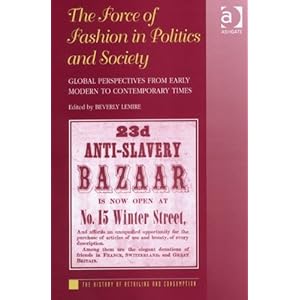 Beverly Lemire, Professor of History and Henry Marshall Tory Chair at the University of Alberta, recently edited a new research resource, The Force of Fashion in Politics and Society: Global perspectives from Early Modern to Contemporary Times in The History of Retailing and Consumption series with Ashgate Press. It provides ten essays in three sections, that were developed out of a panel at the International Economic History Congress, Hesiki in 2006. That session focused on “Fashion, Material culture and Economic Life: Perspectives Across Time, Place and Politics.”