Original caption: "The early fall bathing at Venice, California, where beauties cavort in beach costumes of abbreviated nature not sensed by the censor were treated to a rather unusual sight with Miss Marilyn McKinney appeared on the sands wearing a bething costume of oriental design and heavily beaded." October 10, 1922 via Bettmann/Corbis
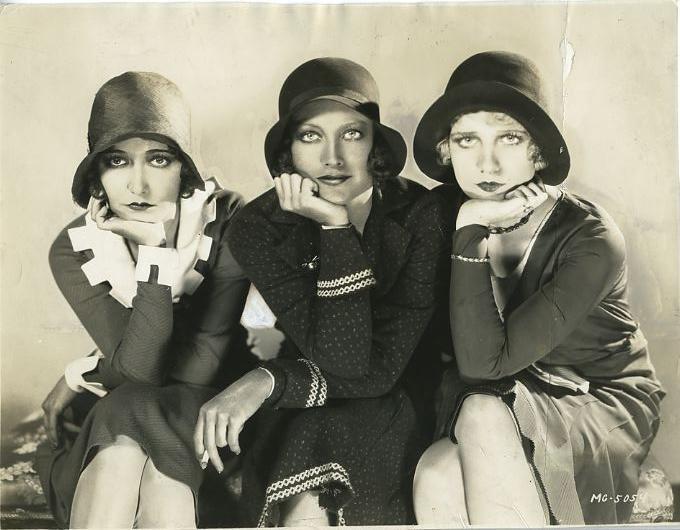
“David Cox, who had been [Gilbert] Clark’s assistant, stayed on until 1931 and became a fully-fledged designer. He did Joan Crawford’s famous beaded Charleston dress for Our Dancing Daughters and the rest of her films until the arrival of Adrian.
Anita Page, Joan Crawford, and Dorothy Sebastian in costumes by David Cox.
Six days before the film had its world premiere in New York on 6 October, an article appeared in the New York Evening Journal that was ostensibly written by Joan Crawford herself. More likely, it was the creation of an anonymous writer in the publicity department. In either case, this article, widely reprinted across the country, goes a long way toward establishing an image for the actress that would reverberate throughout her career at MGM:
‘Something new has entered the world of clothes and personal adornment. It is not just a change in fashion, a new style. It is a concrete, tangible thing. A spirit. The spirit of modernity. The spirit finds an expression of itself in the clothes we wear. They are modern. They are startling. They do not blend; they contrast. They do not conceal; they expose. They do not rustle; they swing. They do not curve; they angle. Perhaps this new feeling in the dress finds its first and most definite expression in the motion picture world. We are the first to exploit a style. The modern clothes spirit I am talking about is abundantly typified in the picture Our Dancing Daughters. My own wardrobe, and the wardrobe worn by Dorothy Sebastian and Anita Page, breathe the very essence of restless activity…the costumes of that particular production as the costumes of my own personal wardrobe.’
Excerpted from
This article was one of the final pieces of publicity in an exploitation onslaught that made Our Dancing Daughters a watershed film for the marketing and publicity departments at Metro-Goldwyn-Mayer.”
While the Met’s big gala for Schiaparelli and Prada: Impossible Conversationshas come and gone, the curatorial work and content of the show is the real treat for fashion historians, clothing and costume academics, and enthusiasts alike.
For the past two weeks I’ve been thumbing through the beautifully produced book that accompanies the exhibition. Curators Andrew Bolton and Harold Koda have paired with New Yorker writer Judith Thurman to provide some incredibly well-honed thinking on the two designers, explaining the process for the show; the structural construct behind it; and providing new analysis of the two vastly different and yet remarkably similar designers.
Schiaparelli and Pradawas developed, in part, to take advantage of the recent addition of a significant number of Schiaparelli pieces acquired from the Brooklyn Museum’s collection. Curators and staff had long wanted to put together a ‘conversation’ exhibition between two designers, and modeled the show on Miguel Covarrubias’s “Impossible Interviews” fictional series done for Vanity Fair in the 1930s. The ‘book within a book’ design concept provides space for the two designers statements on similar subject matter to create what the curators deem (appropriately enough) “a faintly surreal conversational tone.”
From "The Surreal Body" (Schiaparelli -right; Prada - left)
Schiaparelli and Pradais divided into seven sections examining varying types of ‘chic,’ (hard, ugly, naif) and ‘the body’ (classic, exotic, surreal) explored by the two designers, as well as a section called ‘waist up/waist down.’ The premise reminds me of a comparative literature class I once took in undergrad that focused on William Faulkner and Toni Morrison where the final project was to enact a fictional debate between the two authors. The result was a deeper and more nuanced understanding – and the same results are achieved with Schiaparelli and Prada.
Through this we learn how dis-similar the two views are on fashion as art (Schiaparelli: Pro; Parda: Con); yet how similar their interests were/are in narrative prints, the artistic avant garde, tromp l’oil, as well as both good and bad taste (perhaps the ‘bad taste’ element inspired the Mark Jacobs fiasco). I’ve yet to finish it, but I’m intrigued but what I’ve encountered so far.
For more of the visual comparisons made by the book, I’ve included some sample page-spreads below:
1/16/1932-Palm Springs, CA- Pola Negri, film actress, recuperating from her recent illness at Palm Springs, CA, had quite a chat with Na Glee Nonassa (the Peacemaker) Princess of the Navajo tribe of Native Americans living in that section. (via Corbis)
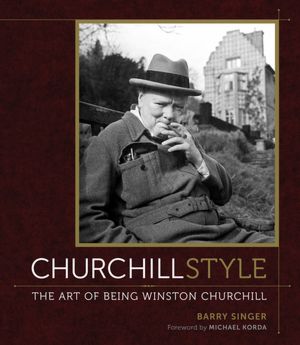
As the New York Times pointed out back in February (“Winnie the Posh”), there is a small, but growing number of new books devoted to Winston Churchill. Though their brief note (and image gallery) didn’t do much in terms of reviewing the new book Churchill Style: The Art of Being Winston Churchill by Barry Singer, the Wall Street Journal‘s article from last Saturday (“The Wonderful World of Winnie“) does go a little further:
“Churchill’s tastes for whiskey, Cognac, cigars and painting are well known, but Mr. Singer’s book—packed with the prime minister’s old order forms for suits, Champagne and cigars, and a wealth of archival images—unearths other, more surprising tastes, including a penchant for butterflies, roses, pink silk underwear, zippers (on anything), bricklaying and even jumpsuits.”
The article goes on to give brief quotes from the book on Churchill’s tastes for suiting, bowties, outerwear, undergarments, workwear, shoes and hats.
He loved his slippers and had them made at Hook, Knowles & Co. (via Chartwell Booksellers /Wall Street Journal)
Having the book in hand, and reading it over the last week – I find that Mr. Singer is a marvelous and succinct story teller. I’ve learned tremendous amounts about a man whom, until recently, I knew very little. Each chronological chapter is rich with not only illustrations, but also in tremendous stories. Each chapter is divided into short subtitled sections discussing things like “Home,” “Fashion,” “Dining,” and “Pastimes.” Of course, the sections on fashion were of interest to me – but surprisingly, the home sections revealed interesting textile tidbits as well. For example: as a teenager at boarding school in the 1880s, Churchill asked his mother to send him some Liberty fabrics to decorate his dorm room.
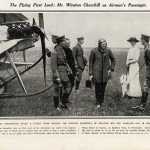
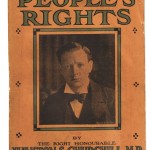
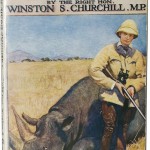
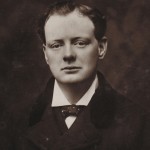
The book makes the political figure seem somehow more human and more knowable, by making his everyday life and everyday choices more readily accessible to us. The book was officially released to the public yesterday and is for sale at Amazon or your local bookstore. A few select images of Churchill, as depicted in the book, are below:
June 1, 1935: "Women Play Bowls A bowls match with participants wearing the latest fashion in beach pyjamas, England, 1935." Via Corbis
Initially introduced as fashionable women’s wear in 1922 by Paul Poiret as pajamas, they eventually evolved into casual wear worn for specific occasions– for sleeping, lounging and the beach (Watson, 2004). Lounging pajamas, according to Vogue, were for “when informal entertainments and masquerades are the order of the day.” Chanel helped with the general acceptance of women’s trousers, and was often seen wearing sailor-style pants. Pants of this era were loose with an elastic or drawstring waists with a side closure (Mendes & De La Haye, 1999).
June 23, 1930-Long Island, NY Winthrop-Garley society spectators at a Polo Game in Locust Valley, Long Island. Mrs. Robert Winthrop (via Corbis).
8/1/1934-Hollywood, CA: Marlene Dietrich and daughter Maria Sieber, at the Polo Matches in Los Angeles (Via Corbis).At the Meadow Brook Club, after the polo match, from left: Mrs. Burrall Hoffman, Mrs. Malcolm Stevenson, Mrs. William Goadby Loew, Mrs. Cornelius Vanderbilt, and Mrs. George Baker. Ca.1927, in Westbury, Long Island. by Pierre Mourgue (Via Corbis).Woman in Molyneux Coat at Polo Match Vogue Magazine, ca. 1929 by Leslie Saalburg (Via Corbis).
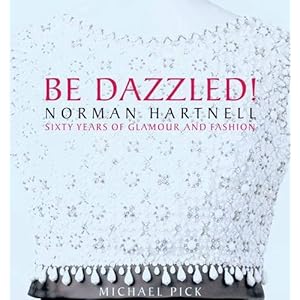
Three ready-to-wear dresses, dating from 1942, brought the allure of the Hartnell name to the general public during World War II; Hartnell sporting the British Home Guard uniform in the salon at 26 Bruton Street. (Via Pointed Leaf Press)
For this new book, author Michael Pick utilized unlimited access to the Hartnell archives and provides insights into the designers life and career – including his royal clientele (Queen Elizabeth, Princess Margaret, and lesser Royals). It includes not only examples of his garment design, but also includes shoe designs, as well as “descriptions and swatches from Hartnell’s personal workbooks detail his designs from the Queen’s wardrobe from the 1953-54 Royal Tour.” TBe Dazzled! Norman Hartnell: Sixty Years of Glamour and Fashion will likely appeal not only to design history buffs and fashion historians, but also to followers of the British Royals. Enjoy!
I was wandering around Amazon yesterday and discovered a handy list that tells you exactly which new or about-to-be-released books on fashion are already their top sellers. Not only does it indicate what’s about to be a hot topic, it also helps fashion book-horders like myself save money (pre-ordering through Amazon can save you as much as 40% off the regular price). Anyway – here are just a few of the current top sellers:
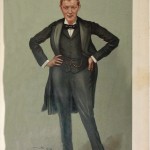
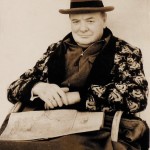
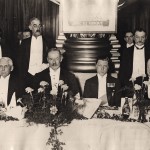
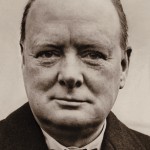
Book description: “Cecil Beaton was a man of dazzling charm and style, and his talents were many. At the age of twenty he sent Vogue an out-of focus snap of a college play, and for the next half-century and more he kept readers of the magazine up to date on all the various activities of his career. Condé Nast, the owner of Vogue, convinced Beaton to abandon his pocket Kodak, and his resulting photographic work earned him a place among the great chroniclers of fashion. Witty and inventive, he also designed settings for plays and films—and for himself—and as a writer he was an eloquent champion of stylish living. This book includes articles, drawings, and photographs by Beaton dating from the 1920s to the 1970s. Beaton loved Vogue, and his contributions testify to the wit, imagination, and professionalism that he and the magazine always had in common.”
By Stefano Catalani, Jeannine Falino, and Janet Koplos
Available: March 1, 2012 (though Amazon seems to be out of stock)
Book description: “Over the past 40 years, Mary Lee Hu has affirmed her distinctive voice in the world of jewelry with her elegant, voluptuous creations. Using wire the way hand weavers use threads, Hu has blazed a trail as both artist and innovator, exploring the nexus between metalsmithing and textile techniques, often through the recovery of historical precedents from an ancient past, and inspired by her innate aspiration to perfection and her stubborn curiosity. Hu’s apparently effortless and graceful creations, resulting from twining, weaving, knotting, and braiding, investigate both the possibilities and limits of wire by melding fiber art and jewelry, structure and pattern, light and line. Knitted, Knotted, Twisted, and Twined features exquisite earrings, rings, brooches, and neckpieces drawn from public and private collections internationally. The book traces the evolution and refinement of Hu’s processes and skill from her earliest experimental pieces in the late 1960s–capturing the spirit of a time when craft and lifestyle were so passionately intertwined–to the confidence and movement of her contemporary creations.”
Book Description: “Although separated by time, Miuccia Prada and Elsa Schiaparelli—both Italian, both feminists—share striking affinities in terms of their design strategies and fashion manifestoes. Presented as an intimate “conversation,” Schiaparelli and Prada: Impossible Conversations aims to tease out formal and conceptual similarities between the two designers. Striking photographs and insightful texts illustrate the parallels between the two, including their preferences for interesting textiles and prints, eccentric color palettes, and a bold and playful approach to styling and accessories. Schiaparelli, in the 1920s through 50s, and Prada, from the late 1980s to today, exploited the narrative possibilities of prints, sought out unconventional textiles, played with ideas of good and bad taste, and manipulated scale for surrealistic outcomes. Contemporary art plays a major role in the work of these inventive women—Schiaparelli in her famous collaborations with Dali and Cocteau, and Prada via her Fondazione Prada. Blending the historic with the contemporary, the catalogue brings the masterworks of both designers together into a grand conversation between the most important women fashion designers to ever emerge from Italy.”


_03.jpg)









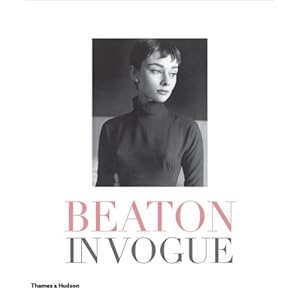 Beaton in Vogue By Josephine Ross
 Knitted, Knotted, Twisted, and Twined: The Jewelry of Mary Lee Hu
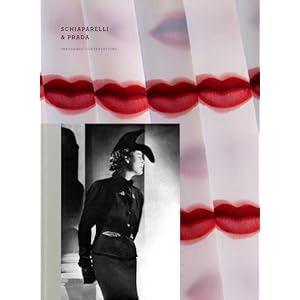 Schiaparelli and Prada: Impossible Conversations (Metropolitan Museum of Art)