Accessories in Fashion Studies

Lifetime Television, in hopes of capitalizing on the success of Project Runway, is to begin a new series in November “Project Accessory” with Molly Sims as host. This got me thinking about the role that accessories have really played in the history and study of fashion. It’s not a foreign concept to me. This time last year, I asked a dear friend to write a book review of Accessories to Modernity: Fashion and the Feminine in Nineteenth-Century France.

While that book was through-written, a new publication from University of Minnesota Press plays directly into the zeitgeist and the newest recognition of the accessory in fashion. Released in August, Accesorizing the Body (edited by Cristina Giorcelli and Paula Rabinowitz ) is the first in a four-part series Habits of Being.  The seires consists of extracts of the “best essays from the ongoing editions of Abito e Identita: ricerche de sortia letteraria e cultrurale, edited by Cristina Giocelli and published since 1995” now being published in English for the first time.

The first volume in the series, is wide ranging, and contributes research and theoretical discussions on various types of accessories-hats, shoes, vests, anklets, etc – but it is also deeply analytical, and for those who don’t speak Italian, will become a valuable resource for the analysis of accessories in a larger context. The essayists come from a variety of scholarly backgrounds – art history, semiotics literary studies, history fashion and even psychoanalysis. It is something I want to take my time in reading.

Zora Neale Hurston, photo by Carl Van Vechten (1938)

The essay “Coco, Zelda, Sara, Daisy, and Nicole: Accessories for new ways of being a woman” by Martha Banta, professor emeritus of English at the University of California, Los Angeles, is of particular interest and suggests connections between major figures in 1920s culture. Another essay on the poet Laura (Riding) Jackson, titled , “Precious Objects: Laura Riding, her tiara, and the petrarchan muse” is written by Becky Peterson – herself a poet and an alumni of the MFA program in English at Mills College (and now a graduate of the University of Minnesota). She looks at the role jewelry (and other precious objects) played in Riding’s poems. The essay, “Black Hattitude” looks at African American hat-wearing and attitude (specifically Zola Neale Hurston) and is written by Jeffrey C. Stewart, professor and chair of Black Studies at the University of California, Santa Barbara.

Cover of Report for a Corpse by Henry kane (New York: Dell Publishing Company Inc., 1949. Cover by Gerald Gregg.)

Still more essays intrigue: one looks at Spanish women’s clothing after the civil war, while another explores the image of the yellow Jewish star, and still another looks at the use of women’s shoes and anklets in images and film. There are more–on metaphysical sandals, cinematic jewels and futurist vests.

These are all relatively short essays, but extremely well written and thought provoking.  The book covers a lot of ground and packs some pretty heavy hitting theory along with it, referencing Jacques Derrida, Karl Marx, Martin Heidegger, but also Ann Hollander, Joanne Entwistle, Colin McDowell, and James Laver.

It’s marvelous to read in such a digestible format, and I’m looking forward to the next volumes in the series.

 

Continue Reading

The Wednesday Word: Ulrich Lehmann on why Fashion is worthy of study

Erwin Blumenfeld, Audrey Hepburn (1952), New York Audrey Hepburn is wearing a hat designed by Blumenfeld and made by Mister Fred, one of New York's most talented milliners. Blumenfeld here uses a system of mirrors showing the front and back of the hat and allowing infinite repetition of the motif.

“To write about fashion, to discuss its impact and importance, always means to transform the fleeting and transitory into the statue-like and permanent, if only through black letters on a white sheet of paper. Fashion as a topic remains embroiled and disputed because of its alleged lack of substance–in artistic as well as metaphysical terms. The profound and eternal are considered worthy of intellectual analysis; what is transient and fugitie will nearly always be equated consciously or unconsciously with the facile and futile. Yet herein lies fashion’s most absorbing fascination: it challenges us to transpose transitoriness, also the hallmark of modernity, into a medium of high regard, while maintaining its distinct characteristics; to theorize and analyze, yet not to petrify.”

–Ulrich Lehman in Tigerspring: Fashion in Modernity (MIT Press, 2000)

Continue Reading

Advice from the Costume Designer: Travis Banton on accuracy (1935)

Clara Bow In "IT" 1927, costume designed by Travis Banton

As I have said and repeat, my aim is for the legitimate. When a woman is required to dress for golf in a certain scene there is really no point in making her seem ready for a dance at the country club. When she is fitted with a bathing suit it should at least look suitable for water. Keeping this in mind,… I then muster new fashions which are the outcome of many trips to Paris, London and other points of fashion and modify and adjust them to the needs of the role.”

–Travis Banton quoted in Harrison, Helen. “Hollywood’s Own Revolt,” Screenland, March 1935, 33.

Continue Reading

The Wednesday Word: Anne Hollander on the interwar years

Edward Steichen (1819-1972), Fashion photograph, Vogue, 1930.

Western dress requires the body to give clothes meaning, and Western art had always accommodated itself to this need until the possibilities of abstract vision made themselves available to Western eyes, After that, clothes could aim at an ideal shape of their own, to which a body was truly subordinate — a box, a cylnder, a pyramid–and they could be shown to achieve it in a painting or a fashion illustration. Actual bodily shapes, always apt for distortion, now had the further task of turning themselves into detached patterns of their own mind’s eye. This is harder discipline than corseting and padding. Fashion photography, now advancing in the hands of masters such as Steichen and De Meyer, was able to aid the trend and offer black-and-white compositions of compelling authority — all the stronger because the camera now officially represented truth and such creations could not be considered distorted in the same way a drawing could. The ideal simplified shape of a sleek body was now not only indicated by the trend of abstract graphic design but confirmed on film. Since that time, women have had to be slender.”

— Ann Hollander, Seeing Through Clothes (337-338)

Continue Reading

Wonder Woman: Merchandising and Costumes

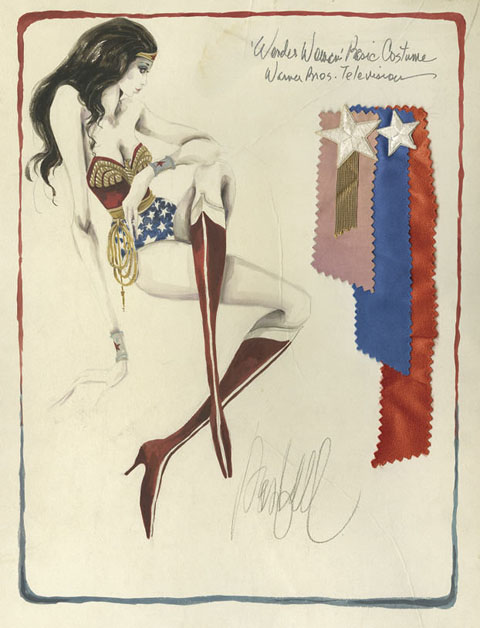
Wonder Woman costume sketch by Donfeld (sold in 2005 for $2,390 at auction)

So really, I am fascinated that there is going to be another iteration of Wonder Woman (apparently in 2015, and possibly starring Christina Hendricks of Madmen fame, to be directed by Nicholas Winding Refn). The original series, starring Lynda Carter, ran from 1975-1979 and the costumes were designed by Donfeld. Donfeld, who died in 2007, was nominated for four Academy Awards and designed costumes for films including “They Shoot Horses, Don’t They?” and “Prizzi’s Honor.”

1980s Underoos ad.

Photographic evidence suggests that I loved Wonder Woman so much as a kid, that I had and wore a pair of Wonder Woman Underoos (at a costume party of some sort – possibly a birthday). Apparently, Christina Hendricks had the underoos too. But I wonder – did Donfeld have anything to do with this childrens design?

I’m curious to know who will design the costumes for the newest version of Wonder Woman, and how her look might reflect ‘current’ fashion (if the story-line holds to the 1940s, might the costumes reflect that more ‘accurately’?)

According to the Metropolitan Museum of Art’s recent exhibition Superhero’s: Fashion and Fantasy:

Over the years, Wonder Woman’s costume, like her character and physique, has been reworked and even reinvented according to prevailing fashions. One of the more drastic redesigns appeared on the cover of Wonder Woman No. 178, October 1968, where the heroine wears an implausibly short mini-dress and a pair of impossibly high thigh-high boots. Bernhard Willhelm evoked this “Mod” look in ensembles from his spring/ summer 2008 collection, although with their star-spangled patterns they also suggested Wonder Woman’s original patriotic costume.”

I’m also curious if the designer for the new Wonder Woman will be able to capitalize on merchandising opportunities, as Madmen designer Janie Bryant has done.

A side note: Director Nicholas Winding Refn is still in the ‘hoping’ stages of production, and thinks he might be closer with a remake of Logan’s Run to star Ryan Gosling. Franlkly, I’m not excited about that idea.

Additional Resources:

http://www.wonderwomancollectors.com

Q Guide to Wonder Woman: Stuff You Didn’t Even Know You Wanted to Know…about Lynda Carter, the Iconic TV Show, and One Amazing Costume

Wonder Woman: The Complete History By Les Daniels

Superheroes: Fashion and Fantasy (exhibition), the Patriotic Body

Reading Wonder Woman’s Body: Mythologies of Gender and Nation by MITRA C. EMAD, Journal of Popular Culture (2006).

Behind Every Great Mad Man Is Janie Bryant: Ad Age Chats With the Designer About the Popular TV Series — and Her Other Endorsements and Plans, Advertising Age, Sept 8, 2011.

Continue Reading

Winner of Friday Freebie! Berliner Chic

I’m very pleased to announce that the winner of our “Pick your favorite German fashion icon” Facebook contest is reader Helen Steele – Congratulations!

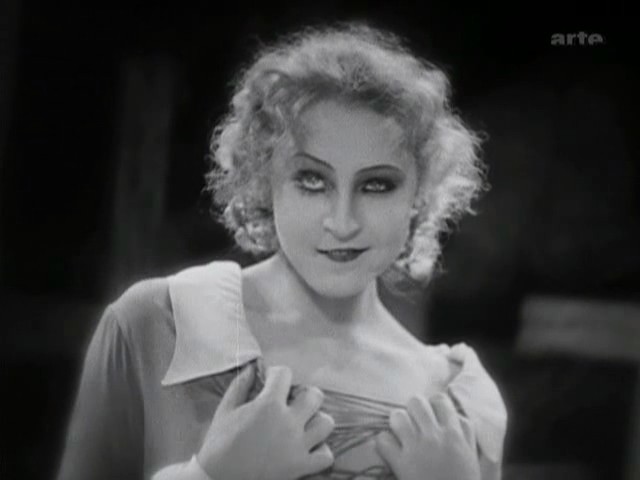
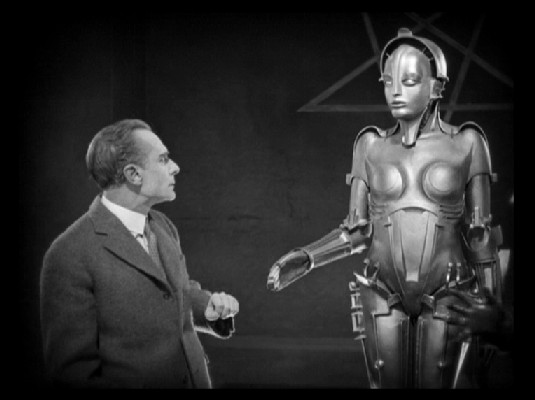
Helen’s winning entry says: “I’d have to pick Brigitte Helm, the actress from Metropolis. As Maria/Robot she features in some of cinema’s most iconic images. She also wears a rather covetable collared dress in the film, very A/W 2011! Her own style encapsulated both the ‘vamp’ look of the silent cinema era and a softer, more elegant Art Deco style.”

Helen will receive a free copy of Berliner Chic

Helm126 Helm127 Helm128 Helm129 Helm130
Helm126.jpg Helm127.jpg Helm128.jpg Helm129.jpg Helm130.jpg
Helm131 Helm132 Helm133 Helm134 Helm135
Helm131.jpg Helm132.jpg Helm133.jpg Helm134.jpg Helm135.jpg
Helm136 Helm137 Helm138 Helm139 Helm140
Helm136.jpg Helm137.jpg Helm138.jpg Helm139.jpg Helm140.jpg
Helm141 Helm142 Helm143 Helm144 Helm145
Helm141.jpg Helm142.jpg Helm143.jpg Helm144.jpg Helm145.jpg
Helm146 Helm147 Helm148 Helm149 Helm150
Helm146.jpg Helm147.jpg Helm148.jpg Helm149.jpg
Continue Reading

Guest Book Review: Searching for Beauty: The Life of Millicent Rogers

Some readers will be familiar with my good friend, Katie Netherton, who has previously written guest book reviews for me elsewhere. Katie earned her Masters degree from New York University in Visual Culture: Costume Studies in 2002. Most recently she worked on the historic documentation project at the Brooklyn Museum and the Gordon Conway archive at The University of Texas’s Harry Ransom Center.

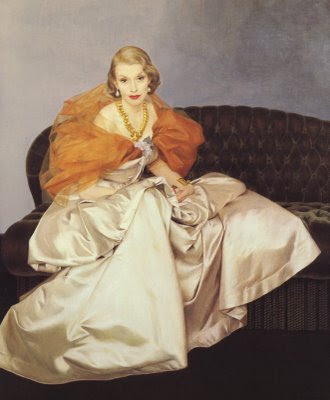
Millicent Rogers in Charles James (Via Stirred, Straight Up, with a Twist Blog)

While we were at NYU, Katie researched and wrote a paper on Millicent Rogers and was in fact the one who brought this book to my attention almost a year ago. The Wall Street Journal recently discussed the book in an article titled “She Wore it Well.” It was also recently tauted in Women’s Wear Daily, who points out this tasty tidbit about Rogers: “When she moved to Hollywood in 1946, Rogers stayed at Valentino’s former house, Falcon’s Lair” and reminds us of her strong connection to the master American couturier, Charles James. The author of Searching for Beauty, Cherie Burns, who recently guest blogged for Huffington Post on the connection between Charles James and Millicent Rogers, has a number of upcoming events scheduled for September and October in Taos and Santa Fe, New Mexico, including the Millicent Rogers Museum.

I’m very pleased to share with you Katie Netherton’s review:

Cherie Burns’ new book, “Searching for Beauty: The Life of Millicent Rogers,” explores the life of style icon Millicent Rogers, a fashion risk taker, art collector, jewelry maker, elegant decorator, and pinnacle of taste and flair. The author seeks to reveal Rogers’ character instead of strictly talking about her style and fashion sense, as many of the previous writings on Millicent Rogers have done. It’s refreshing, and well-deserved. Besides her impeccable collection of fashion and relationships with several important designers, Rogers had many accomplishments worth discovering as well. She was extremely creative and spent her life looking for ways to express herself. She was also very generous, with both her time and resources. She was a mother, a daughter, a wife, and an independent woman in a time when many women strictly followed the rules.

At times, Burns’ writing can seem disjointed, as if snippets from The New York Times and The Washington Post society columns were cut and pasted. But, no author has done such an in-depth job when it comes to sorting out the (sometimes hard to believe) details of Rogers life. Because so many of the well-known stories about Rogers seem to have been passed down over time without a known source, they seem more like legend than fact. By using first-hand accounts from family and friends, including time spent perusing unpublished family photographs, the author is able to shed some light on Rogers’ life and develop her character for the reader. There is little written about Rogers’s personal life, particularly about her personality. Time consuming as I’m sure it was, Burns has done an impeccable job bringing her to life.

Mary Millicent Rogers was born into a prosperous family. Her father, Henry (Harry) Huttleston Rogers, Jr., was the only son of Henry Huttleston Rogers, who along with William and John D. Rockefeller, presided over Standard Oil. Her mother was Mary Benjamin, also from a prominent family. Burns dives right in exploring Millicent’s debutante years and her several marriages and divorces over a short period of time. This well-researched section of the book is filled with quotes from various newspapers and family recollections. This time in Rogers’ life developed her sense of independence, but also reinforced her tie to her family’s money.

A brunette most of her life, Millicent sported a flapper’s short haircut when she stepped out as a soon-to-be young divorcée in 1926. She married again the following year. (The Peralta-Ramos Family archives via St. Martin's Press)

Burns slogs through Rogers’ marriages to Austrian Count Ludwig Salm von Hoogstraeten, Argentinean ArturoPeralta-Ramos and American Ronald Bush Balcom. Rogers had three children: Peter with Salm and Arturo and Paul with Peralta-Ramos. Her last marriage to Balcom ended in 1941. Although she never married again, Rogers had several relationships with public figures such as Ian Fleming, Roald Dahl and Clark Gable. Burns delves into these relationships as well, providing clarity where no other work on Rogers does.She paints a picture of an independent woman who was never fully satisfied with one man, one location, one of anything. It wasn’t that she didn’t love her husbands (or her lovers), but that she was always on the move to what was next, what would open her world just a bit more, whether that was a new relationship or a new house. Burns writes about Rogers as a real person, with heartaches and failed relationships, family dysfunctions and complicated mother-son relationships, and at the end of the day, a woman on a life-long quest for happiness.Burns does an excellent job unearthing Rogers’ generosity. Whether it’s her involvement with recuperating soldiers at her house in Virginia during World War II or her efforts to support the work of the Indians of Taos, she could be selfless when it came to her time and money. She was always willing to help, and seemed to feel that it was important to offer her resources for good.

A display of jewelry at the Millicent Rogers Museum

It is enjoyable to read about Rogers’ time in Taos, particularly since Burns lives in Taos herself. The reader can truly see the author’s love for her home. It lends an air of truth to her description of how Rogers must have felt upon her arrival at the Western outpost. Rogers’ time in Taos, although short, seems to be where she felt most at peace. The rheumatic fever she caught as a child and that plagued her throughout her life was beginning to catch up with her. Her untimely death at age 50 brought her adventurous life to an end. She never once let her fragile health get in the way of exploring new vistas. She was buried in Taos, wrapped in an Indian blanket and wearing some of her favorite Indian jewelry that she had been so avidly collecting. A fitting resting place for an extraordinary woman.

Burns includes a bibliography, never before seen photographs and extensive endnotes, all helpful for those interested in Rogers’ life. She gives Millicent Rogers the kind of attention she deserves, and now her life can be remembered not only for how stylish it was, but also for its generosity, vivacity and kindness.

Further Reading on Millicent Rogers:

In My Fashion by Bettina Ballard, New York: David McKay Company, Inc., 1960.

The Glass of Fashion by Cecil Beaton, London: Artillery House, 1989.

Fine Indian Jewelry of the Southwest: The Millicent Rogers Museum Collection by Shelby J. Tisdale, Santa Fe: Museum of New Mexico Press, 2006.

The Power of Style by Annette Tapert and Diana Edkins, New York: Crown Publishers, 1994.

*Millicent Rogers (Via the Millicent Rogers Museum)

Continue Reading